
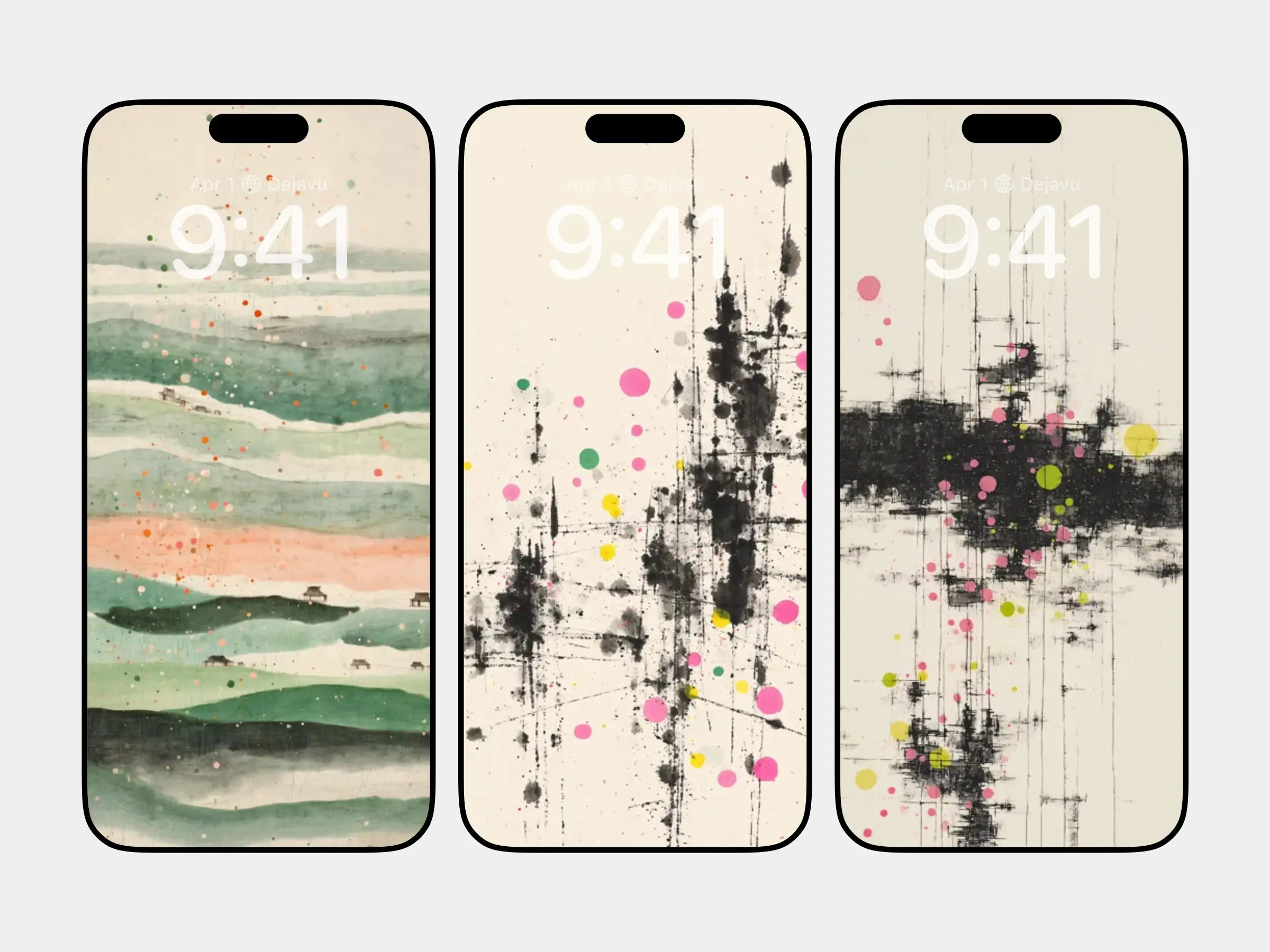

Abstract ink landscape art reimagines traditional aesthetics through modern expression. These works blend classical techniques with contemporary sensibilities, creating unique visual experiences. Discover how ink wash painting evolves in today’s artistic landscape through innovative color usage and compositional approaches.
You can download all these wallpapers on Dejavu Wallpaper!
Experience the magic of AI in advance! Let the infinite imagination of AI decorate your screens, bring you fresh delights every day.


Related Products


When ink wash painting transcends the depiction of specific mountains, rocks, and trees, transforming into flowing colors and lines, traditional landscape art gains a new form of expression. This expression is not a departure from nature, but a reorganization of inner order. In these works, layered ink tones intertwine with leaping color dots, resembling city neon lights reflected on a tranquil lake, or ancient zither melodies echoing in modern spaces. This visual language breaks temporal and spatial boundaries, allowing viewers to find resonance between familiarity and strangeness.
Modern Translation of Ink Tones
The spreading characteristics of ink are given a new mission. Instead of mere contrasts between blank space and substance, ink tones become the framework for constructing space. Varying shades of ink blocks resemble city silhouettes, casting mottled light and shadow on the canvas. This approach preserves the subtlety of Eastern aesthetics while incorporating the direct expression of modern art.
Rhythmic Play of Colors
Scattered color dots are no longer random embellishments but form a unique visual rhythm. Bright colors like pink, lemon yellow, and emerald green create tension with the steady ink tones, akin to improvisation in jazz music. These colors break the inherent tranquility of ink wash painting, injecting a touch of urban vitality and restlessness.
Narrative Function of Lines
Intersecting lines outline architectural contours while deliberately maintaining ambiguity and fragmentation. This treatment suggests the fragmentation of information and the blurriness of memory in modern life. Lines are no longer mere boundaries but become bridges connecting the past and present.
Reconstruction of Atmosphere
The traditional landscape pursuit of “traversable and habitable” is redefined here. Pavilions and towers in the works appear and disappear, as if inviting viewers into a spiritual space that is both familiar and strange. This atmosphere no longer relies on specific scenic depictions but is created through combinations of colors and lines.