
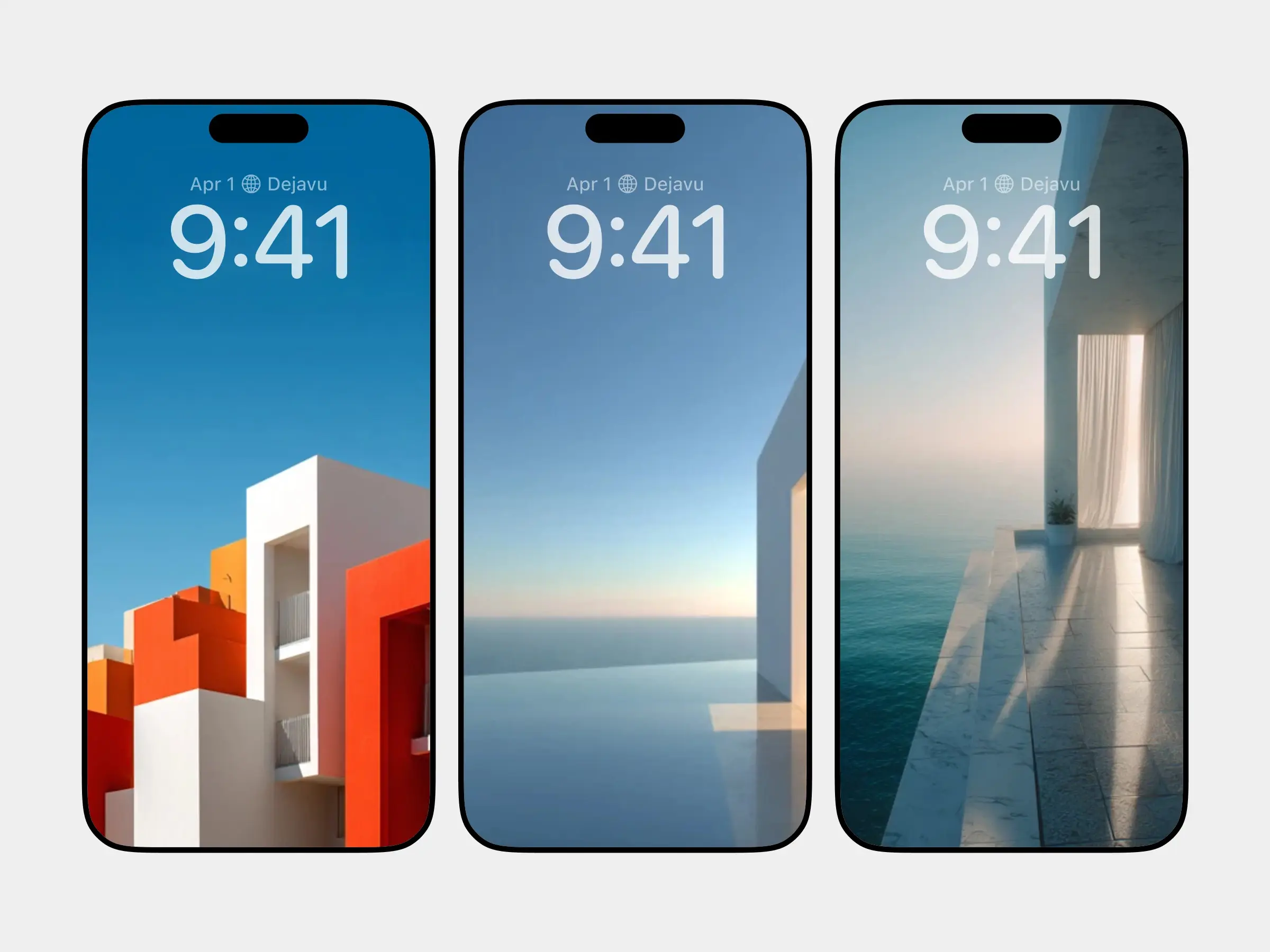

Minimalist architecture redefines space through clean lines, natural light, and serene ocean vistas. These designs emphasize structural purity and emotional stillness, where form follows feeling. Light becomes a central character, shaping mood and perspective. From floating terraces to geometric facades, each element invites contemplation. This aesthetic speaks to modern sensibilities seeking calm in complexity.
You can download all these wallpapers on Dejavu Wallpaper!
Experience the magic of AI in advance! Let the infinite imagination of AI decorate your screens, bring you fresh delights every day.


Related Products


Geometric volumes align beneath a clear sky, forming an almost ritualistic order. White surfaces contrast with orange masses not to draw attention, but to guide perception. Light filters through doorframes like temporal incisions, connecting interior spaces to the endless sea. Plants and drapes on terraces sway gently in the wind, embodying the breath of space. A black cat sits motionless on a cantilevered balcony, gazing into the distance, serving as the sole living symbol within this pure form. Architecture transcends mere shelter—it becomes an emotional vessel, a silent mediator between human and nature. Simplicity does not imply emptiness; instead, it gains weight through absence. Windows and doors exist beyond function—they are conduits of light, boundaries of vision, gateways to the psyche. When humans depart, architecture continues to speak: about solitude, stillness, and the essence of being.
Path of Light
Light emanates from within the structure, passing through openings and illuminating the ground, creating a path extending toward the horizon. This is not physical distance, but a journey of perception. Variations in luminosity suggest the passage of time, amplifying subtle shifts between dawn and dusk. The building ceases to be static; it participates in a dynamic performance of shadow and glow. This design language rejects ornamentation, emphasizing raw materials and precise proportions, allowing viewers to focus on essential experiences—how light defines space, and how space shapes mood.
The Power of Emptiness
Void is not nothingness; it is a cradle for meaning. White walls carry no patterns or emotions, yet contain all possible feelings. Their surfaces reflect the sky’s hue, shifting character with weather. Free of excess detail, only exact scale and placement grant each corner independent presence. This minimalism is not cold, but a gentle restraint, inviting slower observation. In an age of information overload, such spaces offer mental refuge.
Intervention of Life
The appearance of the black cat disrupts geometric symmetry. It is accidental and inevitable. The animal introduces warmth into abstraction, reminding us that architecture ultimately serves life. Its still posture resembles a philosopher contemplating infinity against finite existence. This interaction requires no words, yet conveys profound emotional resonance. Architecture thus acquires soul—not through lavish decoration, but by permitting natural life to enter.
Dialogue Between Sea and Sky
The structure hovers above water, its base nearly merging with the ocean. This design blurs land-sea boundaries, evoking a sense of floating. The soft blue gradient at the horizon echoes the building’s whiteness, achieving visual harmony. Here, human construction does not dominate nature, but humbly integrates. Openness encourages distant sightlines, sparking inner freedom. Architecture becomes a window to vastness, not a cage.