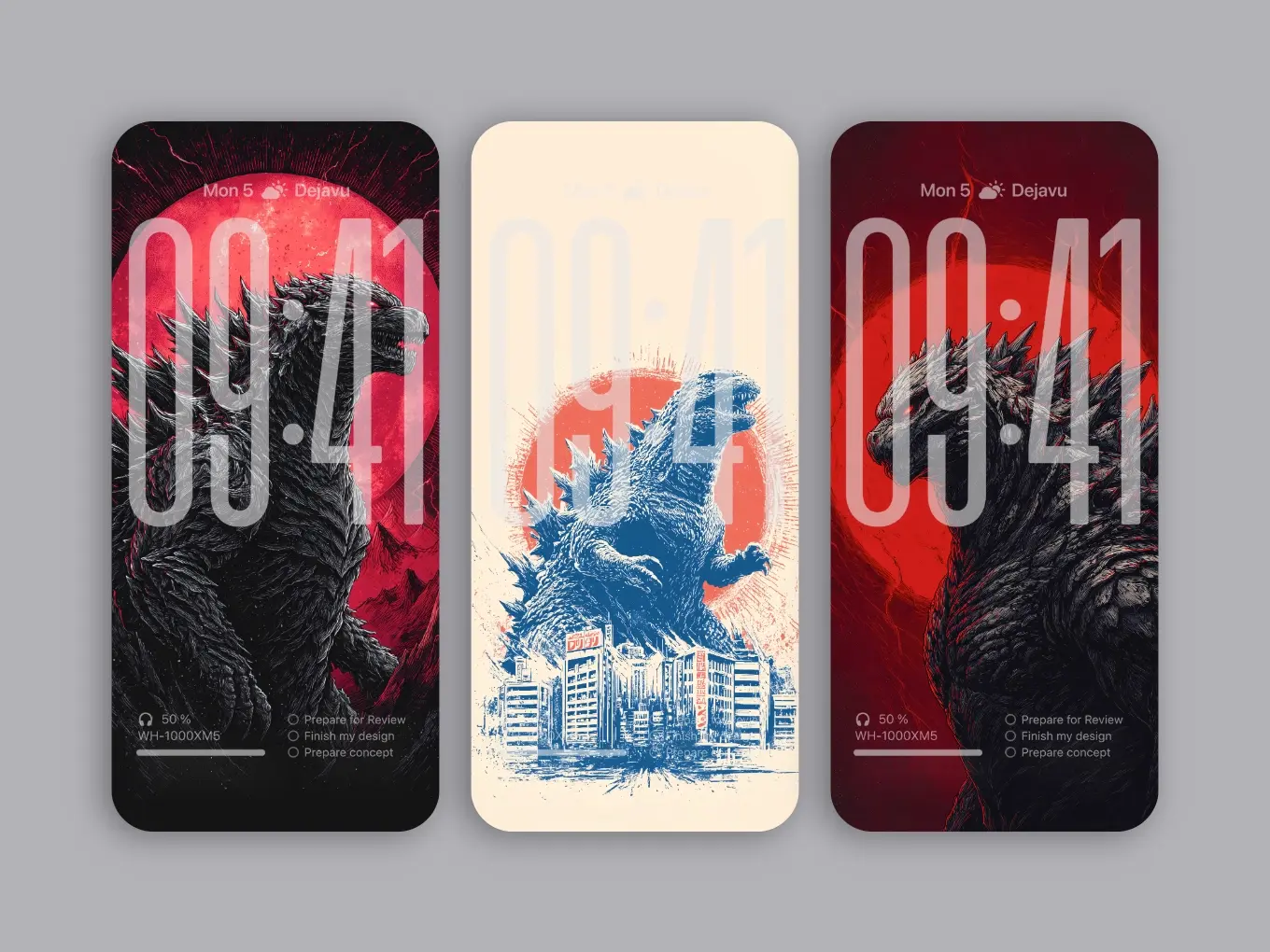

Step into the eerie beauty of the cosmos with our Godzilla and Alien 8K minimal wallpapers. These designs fuse the colossal might of kaiju with the cold mystery of extraterrestrial civilizations, creating a dark yet captivating aesthetic for your phone. Every pixel balances cinematic power and sleek minimalism — perfect for fans of science fiction, horror, and avant-garde art. Whether you’re an iPhone purist or an Android explorer, these ultra-HD wallpapers transform your home screen into a portal between worlds. Feel the tension of Godzilla’s shadow looming over alien ruins, the quiet hum of deep space, and the thrill of the unknown — all condensed into pure visual elegance. Download now and give your device a bold, otherworldly edge that resonates with modern minimal design and classic sci-fi energy.
You can download all these wallpapers on Dejavu Wallpaper!
Experience the magic of AI in advance! Let the infinite imagination of AI decorate your screens, bring you fresh delights every day.


Godzilla and Alien may come from very different worlds—one born out of the Earth’s nuclear fear, the other from the void of space—but together they form a kind of cultural diptych: two visions of terror that merge science, art, and myth.
Godzilla: Fire, Earth, and the Nuclear Shadow
When the first Godzilla film appeared in 1954 Japan, the monster was not just a spectacle—it was a wound in cinematic form. Godzilla’s armored hide resembles molten rock, and its jagged dorsal fins glow like volcanic magma, embodying both nature’s fury and the man-made terror of nuclear weapons. In the Cold War era, Godzilla became a metaphor for humanity’s fragile relationship with energy and destruction: the beast as both victim and avenger of atomic trauma.
Alien: The Birth of Biomechanical Nightmares
In contrast, Ridley Scott’s Alien (1979) emerged from the dark imagination of Swiss artist H. R. Giger. His “biomechanical aesthetic” fused organic anatomy with industrial machinery: skeletal ribs flowing into metal pipes, insect-like jaws gleaming with metallic sheen. This design made the xenomorph both familiar and utterly alien—recognizable in its body parts, yet terrifying in its inhuman logic of reproduction, parasitism, and predation. Where Godzilla symbolizes catastrophic force, Alien embodies invasive intimacy.
Why Did They Become Icons of “Dark Symbols”?
Godzilla represents overwhelming scale: the reminder that humanity is powerless against Earth’s primal forces. Alien represents infiltration: the fear that something unknowable can enter our bodies, our homes, our galaxies. Together, they map two psychological boundaries: the colossal terror from beneath the Earth and the insidious dread from beyond the stars.
Fire and the Cosmos: Twin Aesthetics of Fear
In visual culture, Godzilla is often paired with images of fire, lava, or lightning—earthbound forces of raw energy. Alien, meanwhile, is framed against icy planets, derelict spacecraft, and the silence of deep space. One embodies the planet’s molten core, the other the cold void of cosmic unknown. Fire and cosmos form twin motifs of dark aesthetics, both speaking to forces outside human control.
Artistic Techniques Behind Their Fear
The terror is not only in the concept but also in the art. Godzilla is drawn with massive volume, stark contrasts, and heavy shadows to create oppressive presence. Alien, on the other hand, is detailed almost to discomfort: textures of skin, bones, and metallic surfaces invoke tactile fear. Audiences subconsciously associate these surfaces with sharpness, coldness, and unavoidable death.
What Do Their Stories Tell Us?
At their core, Godzilla and Alien are not just monsters. They are allegories. Godzilla warns of imbalance between human technology and nature, while Alien whispers that extraterrestrial life may be neither friendly nor comprehensible. Both embody anxieties of the modern age—fear of destruction from within our planet, and dread of threats from the wider universe.
They remind us that the line between myth and science fiction is thin, and that every monster carries within it a reflection of ourselves.