
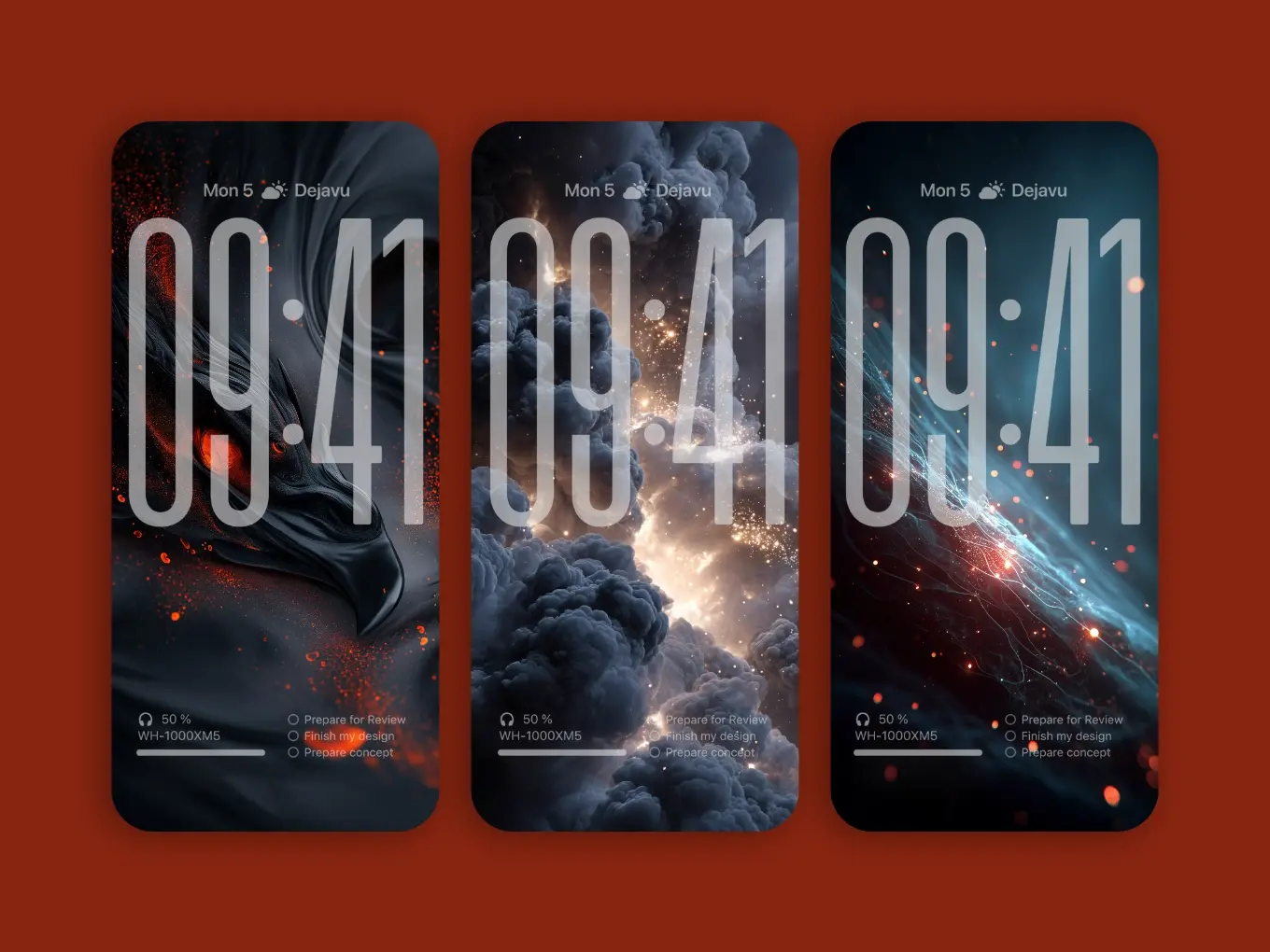

Dive into the ultimate cosmic heatwave with “Volcano and Cosmos”, a blazing 8K wallpaper set that fuses molten fire with starlit wonder. This isn’t just another background — it’s a portal where Earth’s volcanic power rises to meet the silence of space. Each image captures that surreal balance between destruction and beauty, between the planet’s glowing heart and the galaxy’s endless calm. Perfectly optimized for iPhone and Android, these minimal yet dramatic designs bring a cinematic edge to your lock screen without clutter. Whether you’re a space dreamer, a geology geek, or just chasing that bold visual energy, this wallpaper set turns your phone into a pocket-sized window to another world. Download it now and feel the burn of creation against the chill of infinity — because your screen deserves something that actually feels alive.
You can download all these wallpapers on Dejavu Wallpaper!
Experience the magic of AI in advance! Let the infinite imagination of AI decorate your screens, bring you fresh delights every day.


When molten lava bursts through the crust and fire and smoke erupt skyward, humans often feel an uncanny déjà vu: it’s not just Earth’s roar, but a miniature echo of the Big Bang. In fact, volcanic eruptions and cosmic nebulae share surprising similarities. Astronomers, peering through telescopes, see nebulae made of gases and dust scattered across the blackness of space, glowing with points of light. Volcanic ash and sparks, suspended in the night air, mirror these celestial dust clouds—frozen fragments of energy in motion.
Lava Flow and the Life of Stars
Few realize that lava often burns at over 1,000°C—remarkably close to the surface temperatures of some low-mass stars. Red dwarfs, for example, glow between 2,000 and 3,500°C, only about twice as hot as Earth’s molten rivers. To stand near a lava field is, in a way, to feel the afterglow of a shrunken star. Perhaps this explains why ancient cultures so often regarded volcanoes as the dwelling places of gods: their heat and fury seemed aligned with the sun and the stars above.
Can Volcanic Ash Affect Space Exploration?
Volcanoes don’t just shape the Earth; they can influence humanity’s gaze into the cosmos. In 1815, Indonesia’s Mount Tambora erupted so violently that ash veiled the skies, causing global temperatures to plunge in what became known as the “Year Without a Summer.” Scientists now speculate that if a supervolcano erupted again, its dense veil of aerosols could blur ground-based telescopes, making distant galaxies harder to observe. In a strange twist, Earth’s fire might obstruct our ability to study the fires of the stars.
Lava and Meteorites: Flames of the Same Origin
Here’s a hidden connection: lava and meteorites often share the same minerals. Basaltic lava flows and many meteorites contain pyroxene and olivine—minerals forged in the early solar system. They are the building blocks of both planets and asteroids. So when you watch molten rock roll down a slope, you’re also watching the same ingredients that once shaped worlds millions of kilometers away. Earth’s flames carry the same stellar signature as the asteroid belt.
The Aesthetics of Cosmic Fire
From an artistic perspective, the fusion of volcano and cosmos is a study in extreme energy. Against a black backdrop, glowing eruptions resemble supernova explosions; scattered sparks and embers echo drifting stardust. Such visions recall ancient myths of “heavenly fire” while resonating with modern physics’ laws of energy and matter. In contemplating a volcano, we don’t just witness Earth’s inner workings—we glimpse patterns that shape the wider universe.
Volcanoes and nebulae seem to live at opposite ends: one beneath our feet, the other light-years away. Yet they tell the same story: of energy released, matter recycled, and the miracle of forces that sustain life. Next time you watch lava in motion, imagine you are witnessing a star breathe. For in that fiery glow, Earth and cosmos are quietly speaking the same language.