
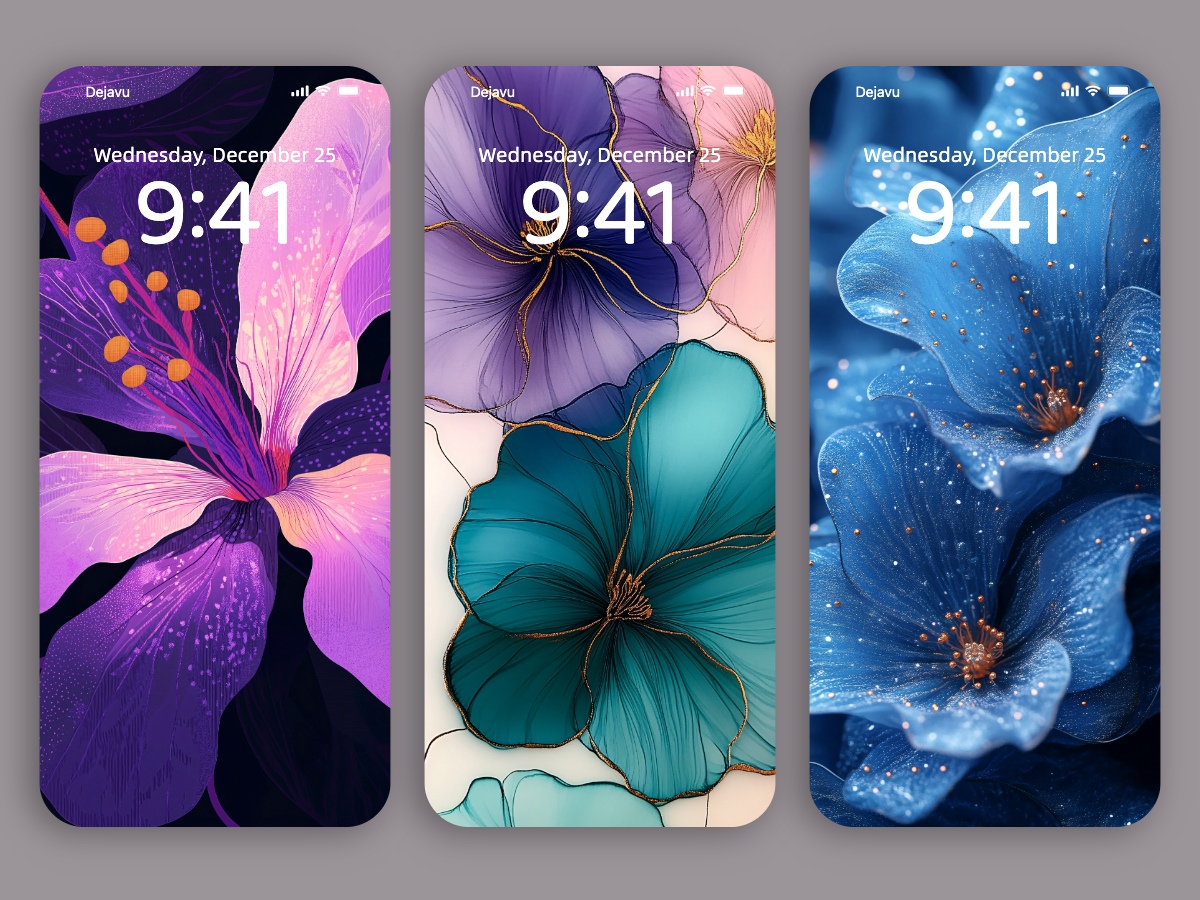

Who knew flowers weren’t just pretty faces? With How Flowers Changed History, Science, and Art 8K minimal phone wallpapers, you’re not just decorating your screen—you’re carrying a piece of history, innovation, and creativity in your pocket. From the tulip mania that shook economies to botanical discoveries that revolutionized medicine, flowers have left their mark on the world in ways you wouldn’t expect. These wallpapers celebrate their timeless influence with sleek, elegant designs—perfect for those who love nature with a modern twist. Whether it’s a delicate sakura blossom, a bold sunflower, or an abstract floral silhouette, each image brings a touch of sophistication to your iPhone or Android. Crisp, clean, and ultra-HD, these 8K wallpapers are a visual treat that turns your screen into a work of art. Ready to add some floral magic to your phone? Download now and let history bloom in the palm of your hand!
You can download all these wallpapers on Dejavu Wallpaper!
Experience the magic of AI in advance! Let the infinite imagination of AI decorate your screens, bring you fresh delights every day.


Flowers are more than just nature’s pretty decorations – they’ve influenced history, sparked scientific discoveries, and even shaped art movements. From the mysterious black tulip to the travel-worn camellia, each flower has a surprising tale to tell. So, let’s dive into some of the lesser-known secrets behind the floral world.
How Did a Tulip Spark an Economic Bubble?
In 17th century Holland, tulips were more than just flowers – they were symbols of wealth and status, especially the rare striped varieties. People went wild for tulip bulbs, with some even trading a single bulb for a mansion! This phenomenon, known as “Tulip Mania,” became one of the world’s first recorded economic bubbles.
But, as bubbles do, it eventually burst. Many investors were left with empty pockets, and tulips became a classic case study in financial history. Today, while the tulip market is far more stable, the Netherlands still remains the world’s top tulip exporter, and visitors flock to Keukenhof Gardens every spring to celebrate this “golden age legacy.”
Why Were Purple Flowers Once Reserved for Royalty?
In the past, purple wasn’t just a color – it was a symbol of power. Thanks to a rare dye called “Tyrian Purple,” made from sea snails in the Mediterranean, purple became extremely expensive and exclusive. Since this dye was so hard to produce, flowers like violets and irises were once reserved for royalty.
In China, the Forbidden City’s name itself reflects the regal power of purple. And in Europe, it wasn’t until the 19th century and the invention of synthetic purple dyes that anyone other than royalty could wear the color. This royal connection also made purple flowers popular in art, symbolizing mystery, luxury, and authority.
How Did Sunflowers Help Scientists Explore the Universe?
Sunflowers are not just happy, sun-loving flowers – they also have a fascinating scientific side! Their seeds follow the “Fibonacci sequence,” a mathematical pattern found throughout nature. This spiral arrangement helps maximize sunlight absorption and has even inspired solar panel designs to boost energy efficiency.
But that’s not all – sunflowers have been to space! NASA astronauts planted them aboard the International Space Station to study how they grow in microgravity. This research has given scientists valuable insights into how plants thrive in space, paving the way for future space agriculture.
How Have Flowers Inspired Artists?
Flowers have been a favorite subject for artists for centuries. Dutch master Jan van Huysum was known for his incredibly detailed still life paintings of flowers, capturing their fleeting beauty in every stroke. His works are still displayed in museums across Europe.
In the 19th century, Impressionist Claude Monet immortalized his water lilies in vibrant colors, showcasing not just the flowers’ beauty but also the play of light and atmosphere around them. Fast forward to the 20th century, and modern artist Georgia O’Keeffe took flowers to a whole new level, magnifying them into abstract forms that made us rethink the very idea of natural beauty.
The Future of Flowers: How Could They Change the World?
With advances in technology, flowers could soon play an even bigger role in our lives. Scientists are exploring how genetic engineering might give flowers the ability to purify the air, or even how specific plants could be used to create new medicines. And then there’s the world of 3D printing and AI – digital flowers are now being created by machines, blending art and technology in ways that challenge traditional painting.
Whether they’ve caused financial crashes or contributed to scientific breakthroughs, flowers have always been more than just a symbol of beauty. The next time you spot a flower, remember: it’s not just a pretty face, but a part of a story written in the pages of history and science.