
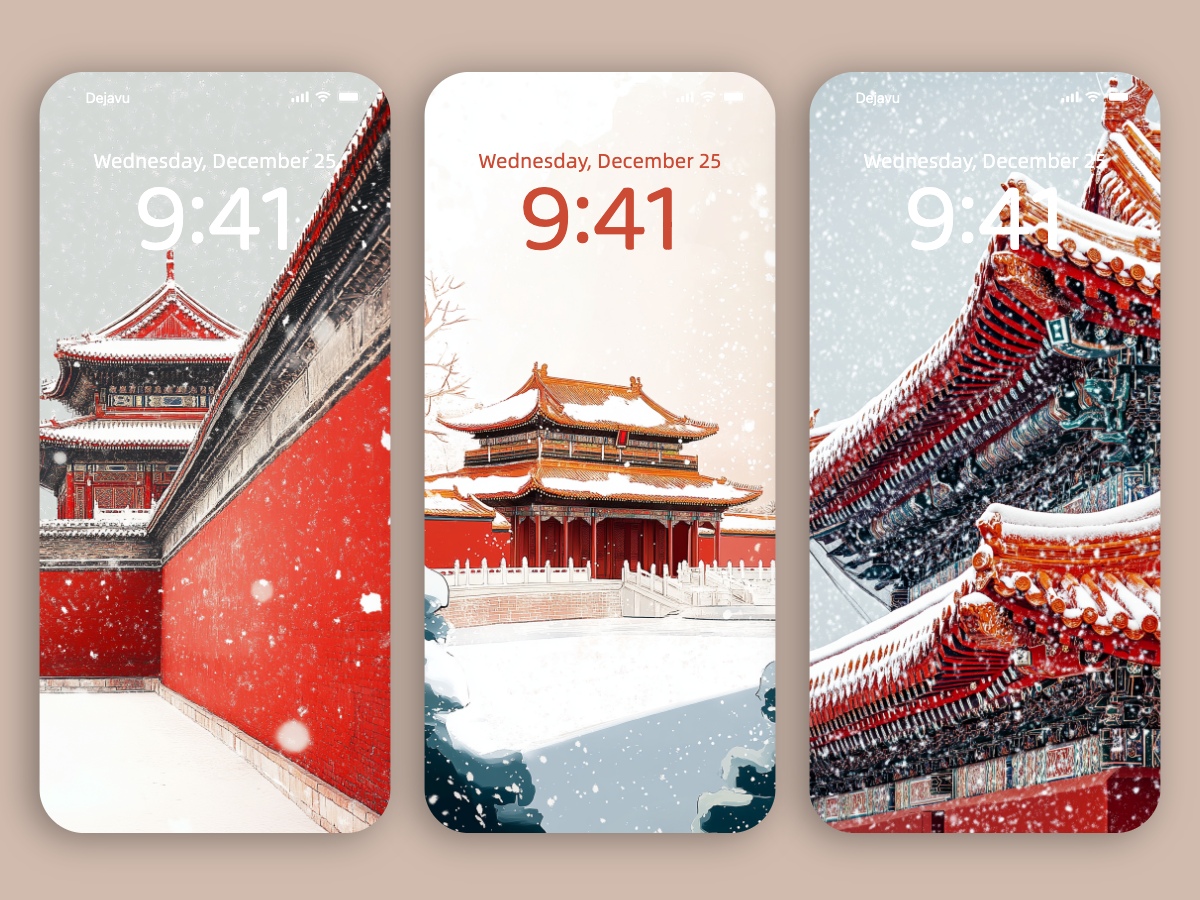

Imagine the majestic Forbidden City blanketed in a serene layer of snow, turning this ancient palace into a winter wonderland. The red walls and golden rooftops peek through the soft white, creating a stunning contrast that feels almost magical. As snowflakes gently fall, the historic courtyards and ornate gates take on a dreamy, tranquil vibe, as if time itself has slowed down.
This enchanting scene makes for the perfect phone wallpaper, capturing the essence of winter beauty and imperial grandeur all in one. Each time you glance at your screen, you’ll feel a touch of calm, as though you’re wandering through the snow-covered alleys of this iconic landmark. Let the snowy Forbidden City be your daily escape into a world of elegance and history.
You can download all these wallpapers on Dejavu Wallpaper!
Experience the magic of AI in advance! Let the infinite imagination of AI decorate your screens, bring you fresh delights every day.


The Forbidden City: A Glimpse into China’s Imperial Past 🏯🀄
The Forbidden City stands as a majestic emblem of China’s rich history and imperial grandeur. Once the heart of the Ming and Qing dynasties, this sprawling palace complex in Beijing is a masterpiece of traditional Chinese architecture and a symbol of imperial power.
What Makes the Forbidden City So Special?
A Fortress of Emperors
The Forbidden City served as the imperial palace for 24 emperors from 1420 to 1912. Its name reflects its exclusivity, as commoners were forbidden from entering without permission. It was not just a royal residence but also the political center of the Chinese government for nearly five centuries.
Architectural Marvel
Spanning over 180 acres, the Forbidden City is the largest palace complex in the world. It comprises nearly 1,000 buildings, each meticulously designed to reflect traditional Chinese symbolism. The layout adheres to the principles of Feng Shui, ensuring harmony and balance throughout the palace.
A City Within a City
The complex is divided into an outer court and an inner court. The outer court was used for ceremonial purposes, while the inner court served as the living quarters of the emperor and his family. The palace’s meticulous design ensured that every corner reflected the emperor’s supreme status.
What Historical Events Shaped the Forbidden City?
Construction Under the Ming Dynasty
Construction of the Forbidden City began in 1406 under Emperor Yongle of the Ming Dynasty and took 14 years to complete. The project mobilized over a million workers, and materials were sourced from across China, including rare wood and marble.
The Fall of the Ming and Rise of the Qing
In 1644, the Ming Dynasty fell, and the Forbidden City became the seat of the Qing Dynasty. The Qing emperors made several modifications, blending Manchu cultural elements with the existing Han Chinese traditions.
The End of Imperial Rule
The Forbidden City ceased to be the seat of Chinese power when the last emperor, Puyi, was abdicated in 1912 following the Xinhai Revolution. Though no longer an imperial residence, the palace remained an important cultural symbol and historical site.
What Treasures Does the Forbidden City Hold?
Priceless Artifacts
The Forbidden City houses the Palace Museum, which contains over 1.8 million artifacts, including ancient ceramics, jade, paintings, and imperial treasures. These items offer a glimpse into the opulence of the Chinese imperial court and its artistic achievements.
Cultural Significance
The intricate designs, colorful murals, and symbolic decorations throughout the Forbidden City tell stories of Chinese mythology, history, and traditions. The use of color, especially the imperial yellow roof tiles, signifies the emperor’s divine status.
Preservation and Restoration
Over the centuries, the Forbidden City has undergone numerous restoration efforts to maintain its grandeur. These efforts have preserved the site as a testament to China’s architectural ingenuity and historical legacy.
Why Is the Forbidden City a UNESCO World Heritage Site?
Historical Importance
Designated a UNESCO World Heritage Site in 1987, the Forbidden City is recognized for its unparalleled significance in Chinese history and culture. It represents the zenith of traditional Chinese palatial architecture and served as a blueprint for many other palaces in East Asia.
Architectural Integrity
The Forbidden City’s design embodies the Chinese aesthetic principles of symmetry, balance, and hierarchy. Its layout and structures provide a comprehensive understanding of ancient Chinese architectural practices and their emphasis on harmony between human creations and nature.
Cultural Heritage
As a symbol of Chinese civilization, the Forbidden City has played a crucial role in cultural continuity and preservation. It serves as a living museum, educating millions of visitors annually about the complexities of China’s imperial past.
How Can You Experience the Forbidden City Today?
A Journey Through Time
Visitors to the Forbidden City can walk through the same halls and courtyards once reserved for emperors, empresses, and courtiers. Each corner of the palace offers a unique story, with guided tours providing insights into its historical and cultural significance.
Virtual Tours and Exhibits
For those unable to visit in person, virtual tours and online exhibits make the grandeur of the Forbidden City accessible from anywhere in the world. These digital experiences allow for an in-depth exploration of its architectural wonders and imperial artifacts.
Cultural Festivals and Events
Throughout the year, the Forbidden City hosts various cultural events and exhibitions that celebrate Chinese heritage. These events offer additional opportunities to experience the site’s rich history in a dynamic and engaging way.
The Forbidden City remains a monument to China’s imperial history, capturing the imagination of all who visit. Its awe-inspiring architecture, historical treasures, and cultural significance make it a must-see for anyone interested in the grandeur of China’s past. 🏯🀄