
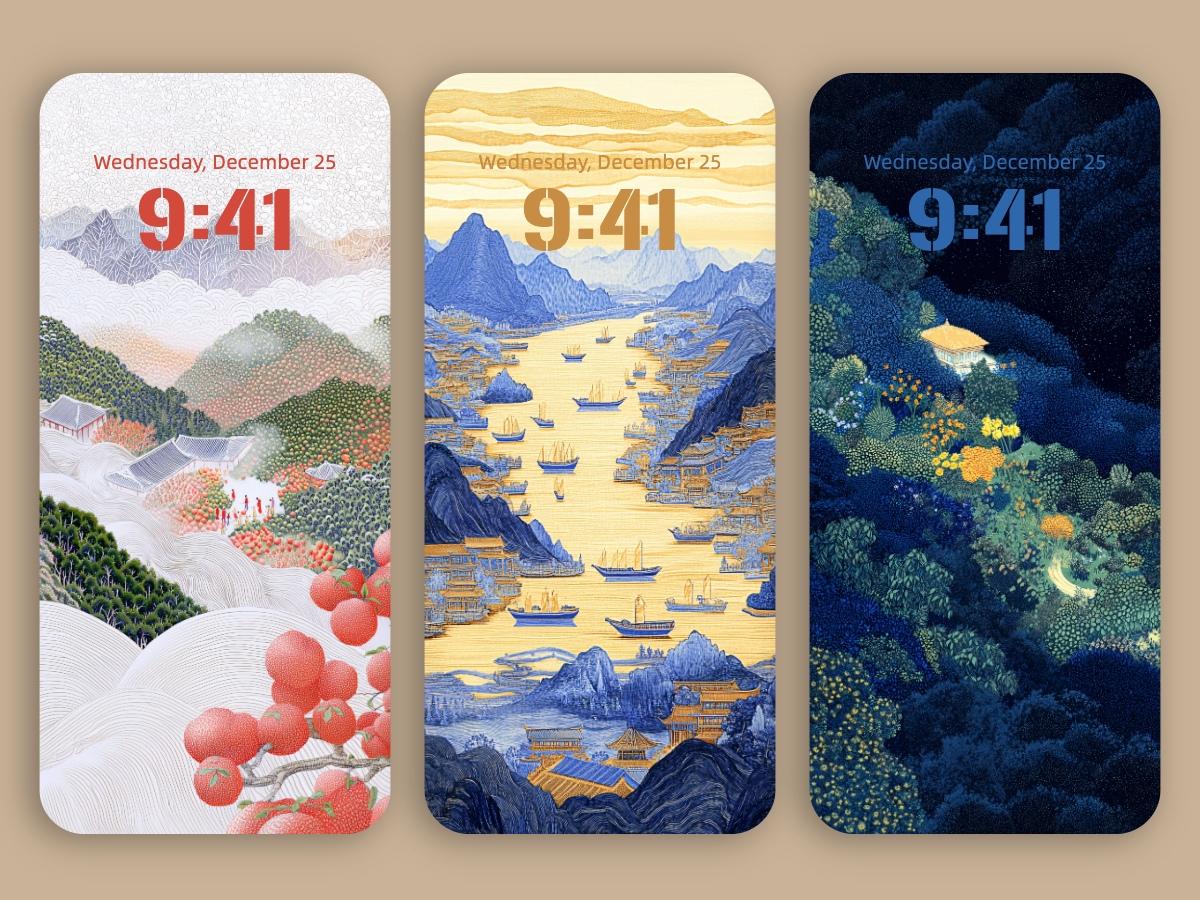

Breathe timeless elegance into your phone screen with Traditional Chinese Painting Minimal Wallpapers in stunning 8K resolution. Inspired by the question, “Why Don’t Traditional Chinese Paintings Use Perspective Like Western Art?” — these wallpapers embrace the poetic flatness and flowing composition unique to classical Chinese art. Forget vanishing points and optical tricks — here, mountains float like dreams, rivers wind like ink on silk, and serenity reigns supreme. Designed for both iPhone and Android, each wallpaper transforms your device into a scroll of minimalistic beauty, blending cultural heritage with modern clarity. Whether it’s the brushstroke of a solitary pine tree or the misty suggestion of distant peaks, these artworks offer visual calm with every swipe. Perfect for lovers of East Asian aesthetics, art history buffs, or anyone wanting a little Zen on their screen. Download now and carry a pocket-sized gallery of harmony, tradition, and refined simplicity — no perspective required.
You can download all these wallpapers on Dejavu Wallpaper!
Experience the magic of AI in advance! Let the infinite imagination of AI decorate your screens, bring you fresh delights every day.


In Western art, ever since the Renaissance, linear perspective has been the golden rule: things farther away look smaller, paler, and less detailed. It’s all about realism and making the painting feel like a window into the world. But Chinese paintings? They said, “Nah, let’s do it differently.”
Instead of a single vanishing point, Chinese painters embraced “floating perspective” — or what scholars call scattered perspective. Imagine the artist not just standing in one spot, but roaming through the landscape, collecting scenes like snapshots from a walk, then stitching them together on a scroll. The result? Not just a picture to look at, but a world you can enter.
Why Is There Always a Tiny Pavilion or a Hermit in the Landscape?
Ever noticed how Chinese landscape paintings often include a lonely pavilion, a cozy cottage, or a tiny old man fishing? These aren’t random decorations — they’re packed with symbolism.
Since the Wei and Jin dynasties, the idea of “living in seclusion” became a major vibe for scholars. Being out of the spotlight, away from court politics, but still full of meaning? Very on-brand for Chinese literati. Artists like Wang Wei from the Tang dynasty were masters of this style — tucking themselves into serene mountains, painting quiet corners of peace. These little structures aren’t just buildings — they’re emotional hideouts.
Why Is “Empty Space” So Important in Chinese Painting?
If you’re used to thinking “a painting should fill the whole canvas,” Chinese art will flip your expectations. In this world, emptiness is full of meaning.
The phrase “leave white as you would black” means that blank space is part of the painting — not a mistake, but a poetic pause. It could be mist, water, sky… or nothing at all. But it makes your brain imagine what could be there. As Song dynasty artist Mi Fu put it, “Great art leaves something unsaid.” That’s where the magic — and the viewer’s imagination — fills in the rest.
Why Do Chinese Paintings Prefer Ink Over Realistic Colors?
Forget photo-realism — Chinese paintings are all about mood, not accuracy. Even when color is used, it’s more like a suggestion of a feeling than a literal snapshot.
Take autumn, for instance. A Western painter might go full-on pumpkin-spice with browns and golds. A Chinese artist? Swirls of vibrant reds and yellows to capture the spirit of autumn. And in ink-only paintings, it’s all about brush technique — wet or dry, thick or thin — to create entire mountains, forests, and rivers out of black ink alone. That’s what they mean when they say “ink holds five colors.”
Why Are the People So Tiny and the Mountains So Huge?
In many Chinese landscape paintings, humans are teeny-tiny while the mountains loom large and majestic. Is nature trying to scare us? Not quite. It’s more about harmony.
The philosophy here is tian ren he yi — humans and nature as one. We’re not the center of the universe, just humble travelers through it. Take Fan Kuan’s Travelers Among Mountains and Streams — the mountain is massive, the travelers almost invisible. It’s a reminder: nature isn’t here for us to conquer; we’re part of it.
Chinese painting isn’t just about replicating what we see — it’s about translating what we feel. Through floating perspectives, empty spaces, poetic metaphors, and humble figures, these works invite you into a world you can wander through, both with your eyes and your heart.
As the old saying goes: “Painting is the art of the heart.” And maybe that’s why, in every gentle brushstroke and misty mountain path, we’re not just seeing a landscape — we’re catching a glimpse of an entire way of thinking.