
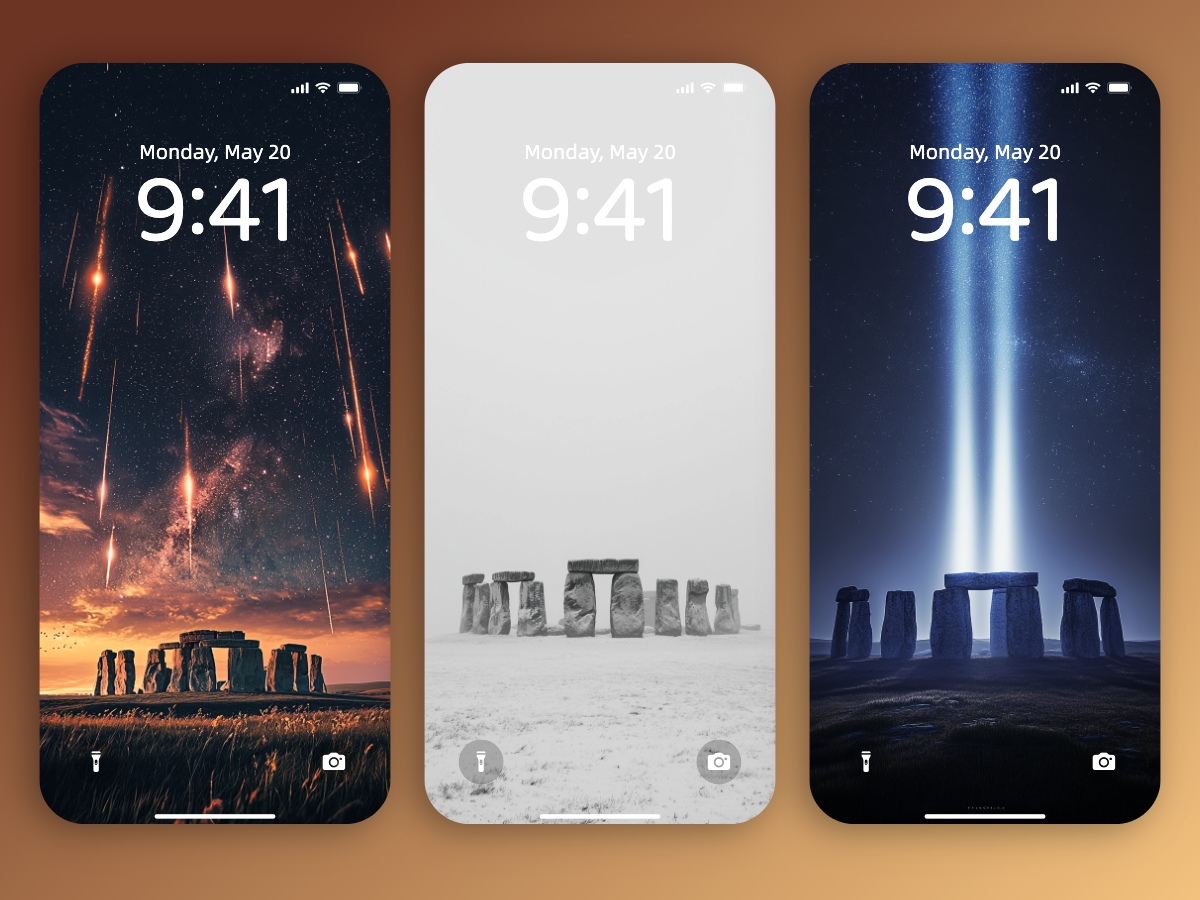

Step into the world of ancient mystery with our Mythical Stonehenge 8K Wallpapers, designed to bring a touch of wonder to your iPhone or Android device. Imagine the iconic stone circle glowing under a starry sky, bathed in soft golden sunlight, or surrounded by swirling mists—each wallpaper is a gateway to the secrets of this prehistoric marvel.
Perfect for history buffs, fantasy lovers, or anyone who appreciates the blend of natural beauty and mystical vibes, these wallpapers transform your screen into a magical scene. With ultra-crisp 8K resolution, every detail of the stones and their ethereal surroundings pops with breathtaking clarity.
Whether you’re channeling your inner druid or simply want a backdrop that inspires awe, these wallpapers are your key to a timeless, mythical ambiance. Download now and let Stonehenge’s enchantment light up your day! 🌟
You can download all these wallpapers on Dejavu Wallpaper!
Experience the magic of AI in advance! Let the infinite imagination of AI decorate your screens, bring you fresh delights every day.


Stonehenge: A Wonder of the Ancient World
Who built Stonehenge? That’s a question historians and scientists have been puzzling over for ages. This massive stone circle, crafted between 3100 BCE and 1600 BCE, wasn’t the work of a single generation—it’s the result of centuries of collaboration by highly organized and skilled communities. These ancient builders transported 25-ton stones from as far as 250 kilometers away, a feat of ingenuity and teamwork that boggles the modern mind.
And here’s a twist: the builders likely hailed from diverse cultures, uniting to create something monumental. Using advanced alignment techniques, they positioned the stones to mark celestial events like the summer and winter solstices. It wasn’t just engineering; it was art, science, and a touch of cosmic magic.
What Was Stonehenge For, Anyway?
Stonehenge’s purpose remains one of history’s great mysteries, but here are some leading theories:
- Sacred Site: Many believe it was a place of worship, perhaps tied to ancient sun rituals, given its alignment with celestial events.
- Burial Ground: Archaeologists have uncovered graves nearby, suggesting Stonehenge could have been a resting place for the elite.
- Astronomical Calendar: Its precise alignment with the sun’s movements hints at its use as a prehistoric calendar, tracking the seasons.
- Symbol of Unity: Building such a marvel might have been a way to strengthen social bonds, a grand project that brought people together.
What Makes Stonehenge an Ancient Marvel?
Stonehenge isn’t just a pile of rocks—it’s an engineering masterpiece, a celestial observatory, and a cultural icon all rolled into one. Here’s why it’s so extraordinary:
- Monumental Feat: Transporting and erecting stones weighing up to 25 tons without modern tools? Mind-blowing. Scholars think the builders used a mix of wooden rollers, sledges, and clever ingenuity.
- Astronomical Precision: The alignment of the stones with solstices shows an advanced understanding of astronomy.
- Cultural Legacy: Stonehenge is more than a monument—it’s a symbol of ancient Europe’s spiritual and social life, preserving the essence of a bygone era.
How Does Stonehenge Connect to British History?
Stonehenge is not just a relic; it’s a touchstone of British identity. In ancient times, it likely served as a spiritual hub for Celtic tribes and other early Europeans. Later, during the Renaissance and Romantic periods, it inspired poets, artists, and thinkers, becoming a symbol of wonder and nostalgia.
Today, Stonehenge is one of Britain’s most iconic tourist attractions. It’s also a gathering spot for modern solstice celebrations, blending ancient traditions with contemporary culture.
What Do Scientists Say About Its Function?
Scientists have explored Stonehenge through the lenses of archaeology, astronomy, and geology, uncovering fascinating possibilities:
- Solar Calendar: The alignment of the stones with the solstices suggests it was a tool for tracking seasonal changes and agricultural cycles.
- Acoustic Marvel: Some studies suggest the stones produce unique resonances, hinting at possible uses in rituals involving sound.
- Social Symbol: Stonehenge may have represented societal unity, a massive collaboration that solidified communal bonds and showcased power structures.
How Does the “Ancient Calendar” Theory Work?
The “ancient calendar” theory ties Stonehenge’s design to a precise understanding of time and celestial events:
- Solstice Alignments: The main axis of Stonehenge aligns with the sunrise at the summer solstice and the sunset at the winter solstice, marking key points in the solar year.
- Shadow Tracking: The stones’ shifting shadows may have been used to mark days and months.
- Lunar Observations: Some believe Stonehenge could also track lunar phases and even predict eclipses.
This theory reveals Stonehenge as a multifunctional marvel, blending science, spirituality, and community. It’s a timeless reminder of humanity’s ingenuity and our deep connection to the cosmos.