
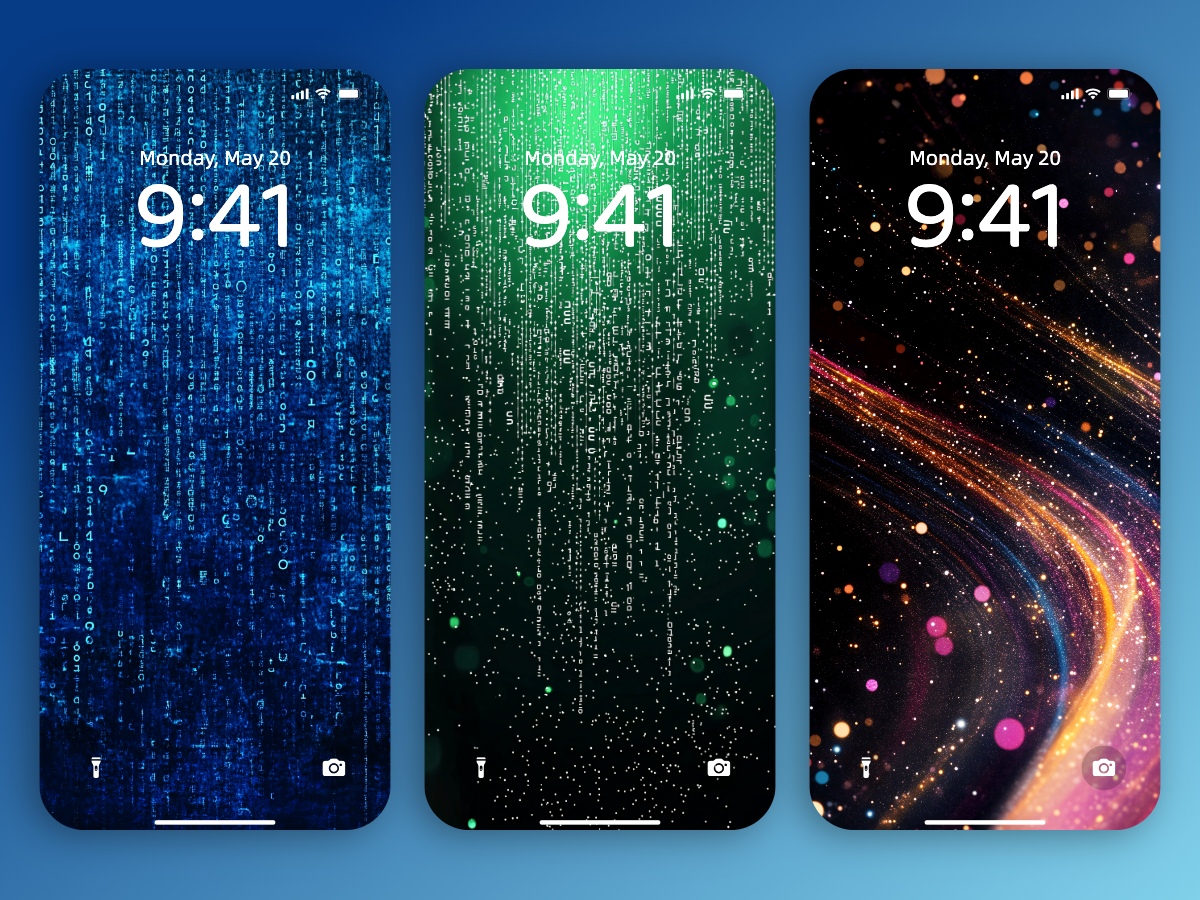

Minimalist tech wallpapers are like a breath of fresh air for your phone! Imagine sleek, clean lines, subtle geometric shapes, and a cool, modern vibe that perfectly complements your device’s screen. These wallpapers strip away the clutter and focus on pure elegance—just like your favorite tech gadgets.
From smooth gradients to abstract patterns, minimalist tech designs are all about simplicity with style. They offer a futuristic aesthetic while keeping things visually pleasing without overwhelming your eyes. Whether you’re a fan of bold, neon accents or soft pastel tones, there’s a minimalist wallpaper out there that will give your phone that cutting-edge, high-tech look.
Plus, the best part? These wallpapers make your screen look sharp and sophisticated, without distracting from your apps and icons. It’s like having a high-tech canvas right in the palm of your hand—perfect for those who love the combination of technology and art. So, if you want a phone screen that’s as sleek and efficient as the devices it holds, minimalist tech wallpapers are your go-to!
You can download all these wallpapers on Dejavu Wallpaper!
Experience the magic of AI in advance! Let the infinite imagination of AI decorate your screens, bring you fresh delights every day.


Why Use Binary Code?
Binary, made up of just two digits—“0” and “1”—may seem simple, but it is key to how computers function. The choice of binary comes from the nature of hardware: electronic components like transistors only need two states—on (1) or off (0)—to represent information.
Compared to decimal or other numeral systems, binary is simple and stable, significantly reducing the complexity of hardware design. This efficiency makes binary the foundation of data processing in computers, ushering in the modern digital age.
How Does Binary Express Complex Information?
Although binary consists only of “0” and “1,” it can represent countless types of information through combinations. For instance, the binary number “10” represents the decimal number “2,” and “101” represents “5.” This system extends information by increasing the number of bits.
Furthermore, binary can encode text, images, sound, and more. For example, the ASCII code assigns each letter, number, or symbol a binary value, enabling computers to store and process text. In audio files, every waveform point is recorded in binary to represent its intensity and frequency.
How is Binary Related to Daily Life?
Despite seeming abstract, binary is actually deeply connected to our everyday lives. Our phones, computers, TVs, and smart home devices all rely on binary for calculations and operations. For example, when you press a key on your keyboard, binary signals are transmitted and translated into the character shown on the screen.
Even QR codes and barcodes, which we encounter frequently, are closely tied to binary. These graphics are essentially visual representations of binary codes, helping devices quickly read and interpret product information or URLs.
What is the Historical Origin of Binary?
Although binary became prominent with modern computing, the concept has existed for centuries. German mathematician Gottfried Wilhelm Leibniz proposed the theory of binary in the 17th century, linking it to the eight trigrams of the I Ching, an ancient Chinese text.
Leibniz believed that binary could simplify mathematical calculations and describe the patterns of nature. His research laid the theoretical foundation for later computer science and made binary one of the most important mathematical inventions in human history.
Conclusion
Binary code, with its minimalist language of “0” and “1,” carries the infinite potential of modern technology. From basic calculations to complex smart devices, it is everywhere, supporting our digital lives. If you’re fascinated by these simple yet powerful symbols, enjoy a collection of AI-designed wallpapers themed around binary code and experience the beauty of numbers on your screen!
The world of digits is full of wonders, and exploring its secrets may bring even more inspiration!
This translation captures the original tone and content while ensuring it’s suitable for English-speaking readers.