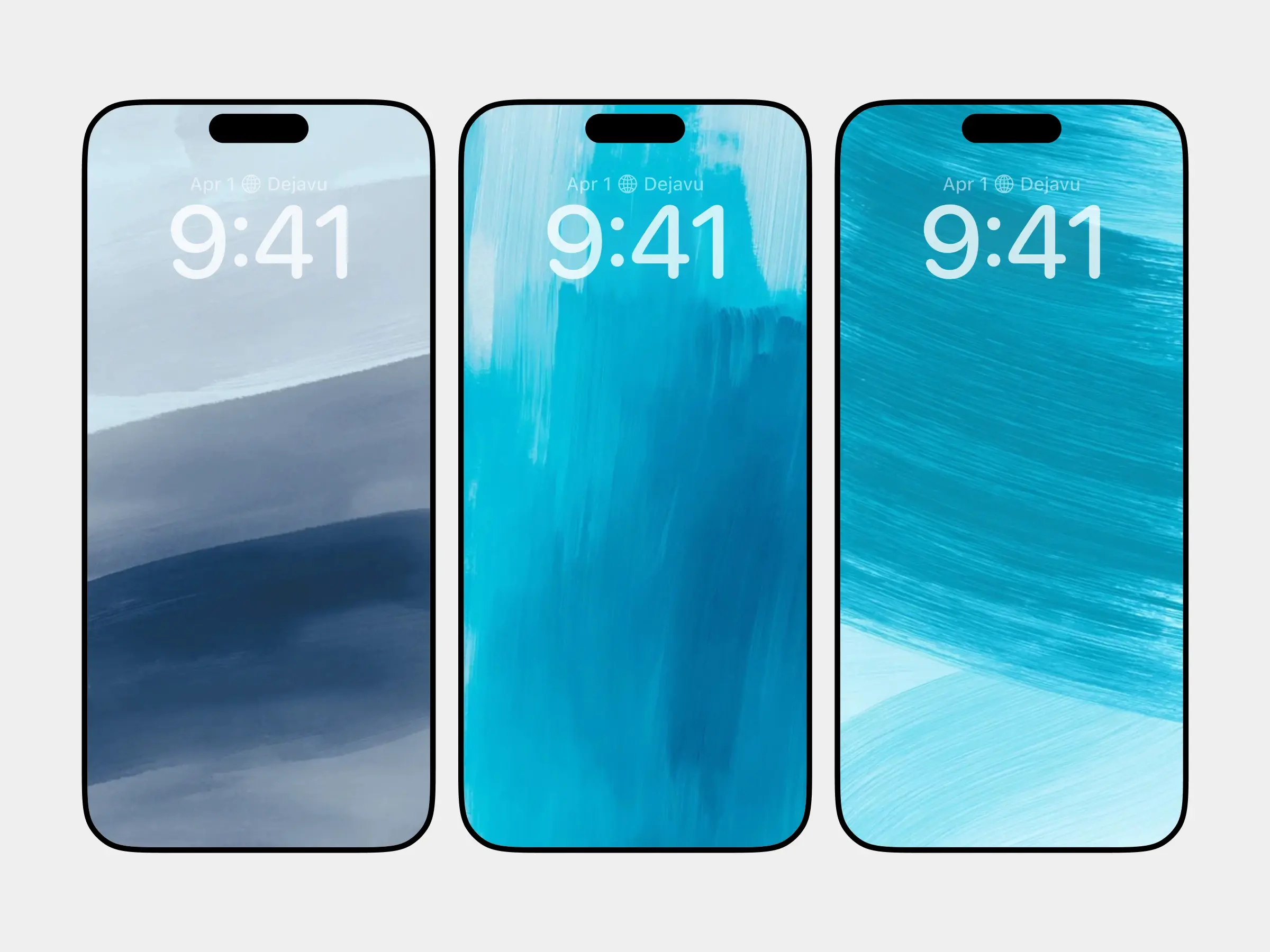

Abstract blue brushstroke textures define a mood of introspection and calm. This collection explores the physicality of paint and the psychology of negative space, offering high-resolution backgrounds that simulate the quiet flow of memory and emotion through cool, layered tones.
You can download all these wallpapers on Dejavu Wallpaper!
Experience the magic of AI in advance! Let the infinite imagination of AI decorate your screens, bring you fresh delights every day.


Related Products


Color on a surface is never a static cover; it is a flow with a sense of breathing. When pigment meets the medium, the bleeding edges and the direction of the stroke build a non-linear narrative together. This narrative does not rely on concrete outlines but simulates a texture similar to memory through the stacking and fading of color blocks. At the junction of deep blue and light gray, there are no clear boundaries, only tentative mutual infiltration. This uncertainty constitutes the interest of viewing, allowing the gaze to wander freely between color blocks to find a psychological balance point.
The Physicality of the Stroke
Every trace records the magnitude and speed of the force applied. The accumulation of thick pigment forms a relief-like texture, while thin bleeding presents an air-like lightness. This physical difference directly affects the transmission of emotion. Urgent strokes are often accompanied by anxiety or excitement, while slow dragging suggests contemplation or melancholy. In abstract expression, the tiny tremors of hand movements are magnified into visual tremors, a characteristic of life that mechanical reproduction cannot simulate.
The Psychology of Negative Space
Areas not fully covered in the composition are not voids but intentional pauses. These negative spaces provide room to breathe for crowded visual information. In color psychology, this sense of space can reduce cognitive load, preventing the viewer from feeling suffocated when facing complex color blocks. Negative space is not just a compositional necessity but a psychological invitation, asking the viewer to fill these undefined areas with imagination, thereby completing a secondary creation of the work.
Mapping the Emotional Spectrum
The juxtaposition of cool tones often points to introspection and alienation. The combination of deep blue, gray-purple, and cyan constructs a low-temperature emotional field. In this field, emotion is not explosive but sedimentary. The variation in color value simulates the attenuation of light, as if transitioning from day to dusk, and then to the quiet of night. This gradient is not just a visual layer but a projection of the passage of time on a psychological level, evoking those lonely moments that cannot be specifically articulated.