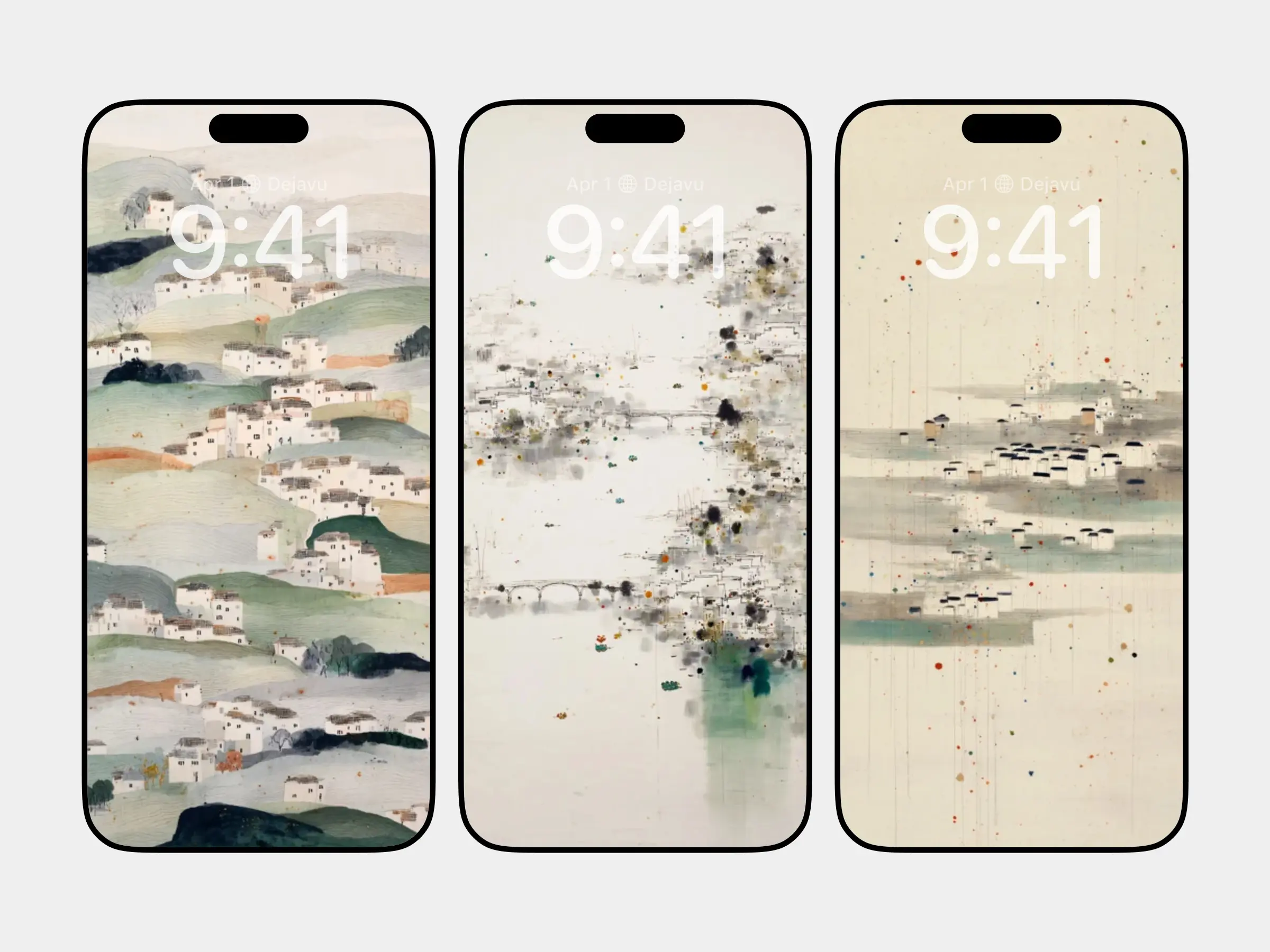

Discover the timeless beauty of Jiangnan through the lens of Wu Guanzhong’s ink wash style. This collection features poetic depictions of white-walled villages and black-tiled roofs nestled in rolling hills. Perfect for those seeking a serene and culturally rich aesthetic for their digital spaces. Explore the harmony of form, negative space, and restrained color that defines this iconic artistic vision.
You can download all these wallpapers on Dejavu Wallpaper!
Experience the magic of AI in advance! Let the infinite imagination of AI decorate your screens, bring you fresh delights every day.


Related Products


Spring in Jiangnan always awakens from the moist air. Villages with white walls and black tiles scatter across rolling hills, resembling dreams lightly stained by ink and wash. This scenery exists not only on the physical land but is also deeply imprinted in the aesthetic memory of the East. Wu Guanzhong captures the essential spirit of the Jiangnan water towns with minimalist lines and colors—not a precise depiction of architecture, but a deep retrospective on a way of life.
Dialogue Between Form and Negative Space
Under Wu Guanzhong’s brush, architecture ceases to be rigid geometry, becoming instead flowing lines and planes. The white walls serve as vast areas of negative space, while the black tiles are rendered with heavy ink dots. This approach breaks the boundaries of traditional landscape painting, infusing the composition with the rhythm of modern structure. Viewers see not just houses, but the breathing relationship between the dwellings and the world. Every patch of empty space feels like an unfinished sentence, inviting the observer to fill in the imagination of tranquility and belonging.
Restraint in Color and Emotion
The palette is extremely restrained. Beyond the dominant black, white, and gray, occasional touches of ochre, cyan, or gamboge appear like wildflowers blooming in spring. These colors do not seek to show off but to awaken. They remind people that amidst the monotony of daily life, subtle and certain vitality persists. This use of color restores the misty texture of Jiangnan’s rainy season and serves as a metaphor for inner peace. There is no noisy red or green, only the elegance of precipitation.
Abstract Expression of Nostalgia
For many far from home, Jiangnan is not merely a geographical concept but a spiritual homeland. Wu Guanzhong abstracts the concrete villages, extracting the symbol of home. The scattered roofs and winding paths form a maze of memory. This abstraction is not intended to create distance but to achieve universal resonance. Wherever one may be, seeing these familiar symbols gently touches the soft corner of the heart regarding one’s hometown. This is a nostalgia that transcends specific locations, representing a shared longing for a peaceful life.