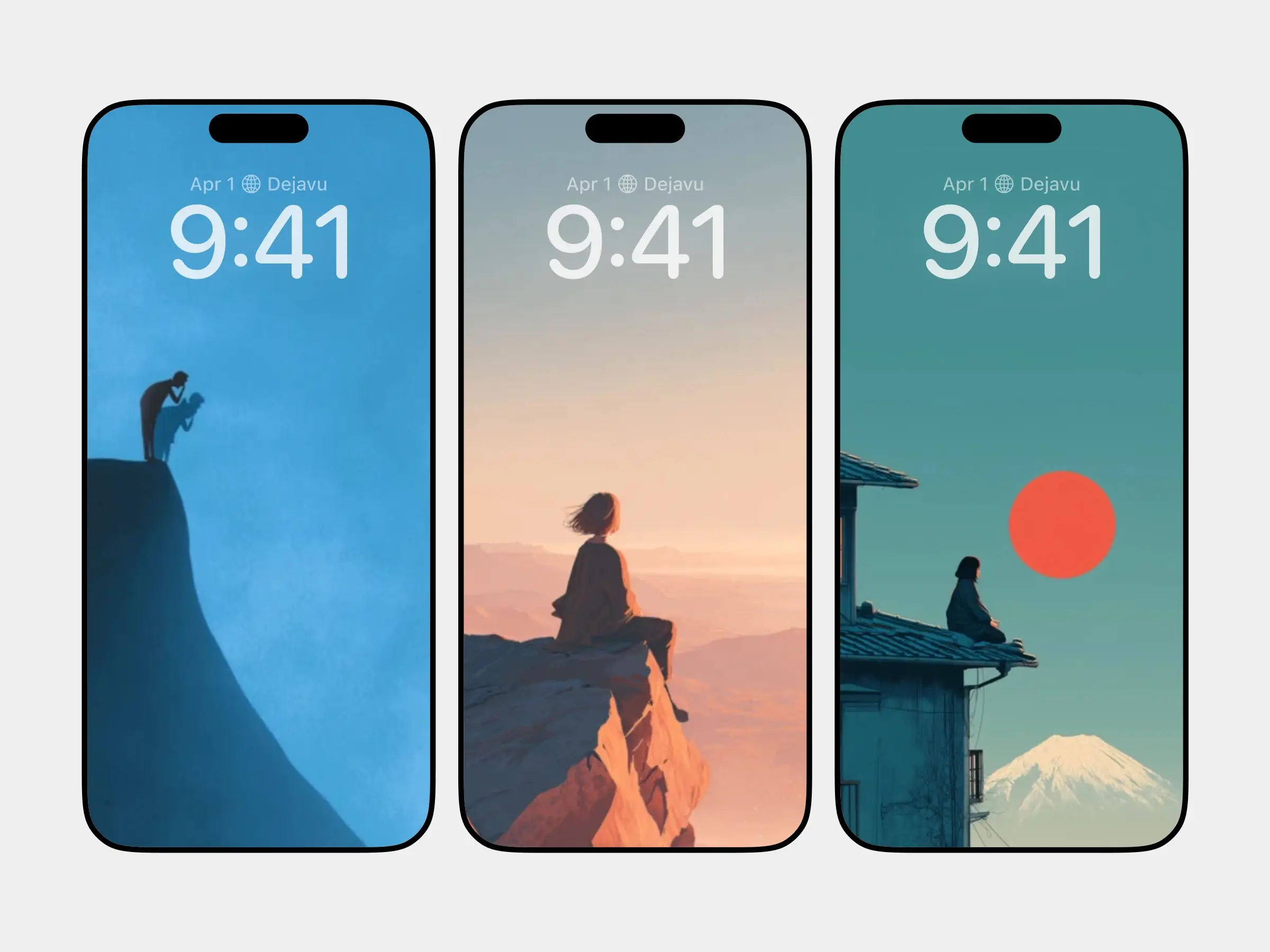

Minimalist solitude scenes featuring lone human figures in vast natural landscapes and surreal environments evoke deep emotional resonance. These compositions explore themes of introspection, existential awareness, and the human condition through symbolic gestures and expansive skies. Ideal for contemplative spaces, they reflect modern desires for mental clarity and spiritual grounding.
You can download all these wallpapers on Dejavu Wallpaper!
Experience the magic of AI in advance! Let the infinite imagination of AI decorate your screens, bring you fresh delights every day.


Related Products


A figure stands atop a peak, bending to touch their own shadow. The shadow trembles slightly in the light, as if another self is whispering. This is not about conquest, but confirmation—affirmation of being, of boundaries. The sky is blue, yet not bright; it is deep, almost melancholic, like the color of memory after time has settled. Between person and shadow lies an unbridgeable gap, yet also a quiet intimacy. This relationship mirrors how humans confront their inner selves: familiar yet alien, close yet distant.
Solitude as a Psychological Landscape
When individuals stand at heights, turned away from cities and crowds, their vision expands infinitely, and inner emptiness follows suit. This spatial isolation is not physical separation, but the manifestation of psychological structure. Climbers, those seated on cliffs, figures silent on rooftops—all express an active retreat. They do not flee, but use their bodies to position themselves at the edge of the world, seeking clarity. This is how modern people respond to societal complexity—through temporary withdrawal, restoring internal order.
Gazing as Dialogue
Staring at clouds, suns, horizons, or even emptiness itself, these acts form silent exchanges between human and the unknowable. The red sun hanging before Mount Fuji functions as a massive symbol—representing both the passage of time and the weight of existence. A figure sits on a roof, gaze fixed forward, unmoving. This posture is not waiting, but participation. It shows that the individual does not passively receive surroundings, but engages with cosmic rhythms through stillness.
Symbolic Labor and Transcendence
The figure pushing a massive stone evokes the myth of Sisyphus, yet here the stone is not punishment but embodiment of responsibility. Each step demands effort, with no visible end. Yet within this repetition, meaning is redefined. Labor becomes purpose, not a means to an end. This challenges modern society’s obsession with efficiency and represents a philosophical resistance.
Floating Paths and the Unknown Future
A floating staircase stretches into the sky, the walker small but resolute. The path has no beginning, no clear destination—only an endless extension. It symbolizes life’s uncertainty and the courage required to move forward despite ambiguity. The steps hover in void, suggesting instability in reality, yet the walker does not hesitate. This reflects belief—a tangible response to abstract futures.