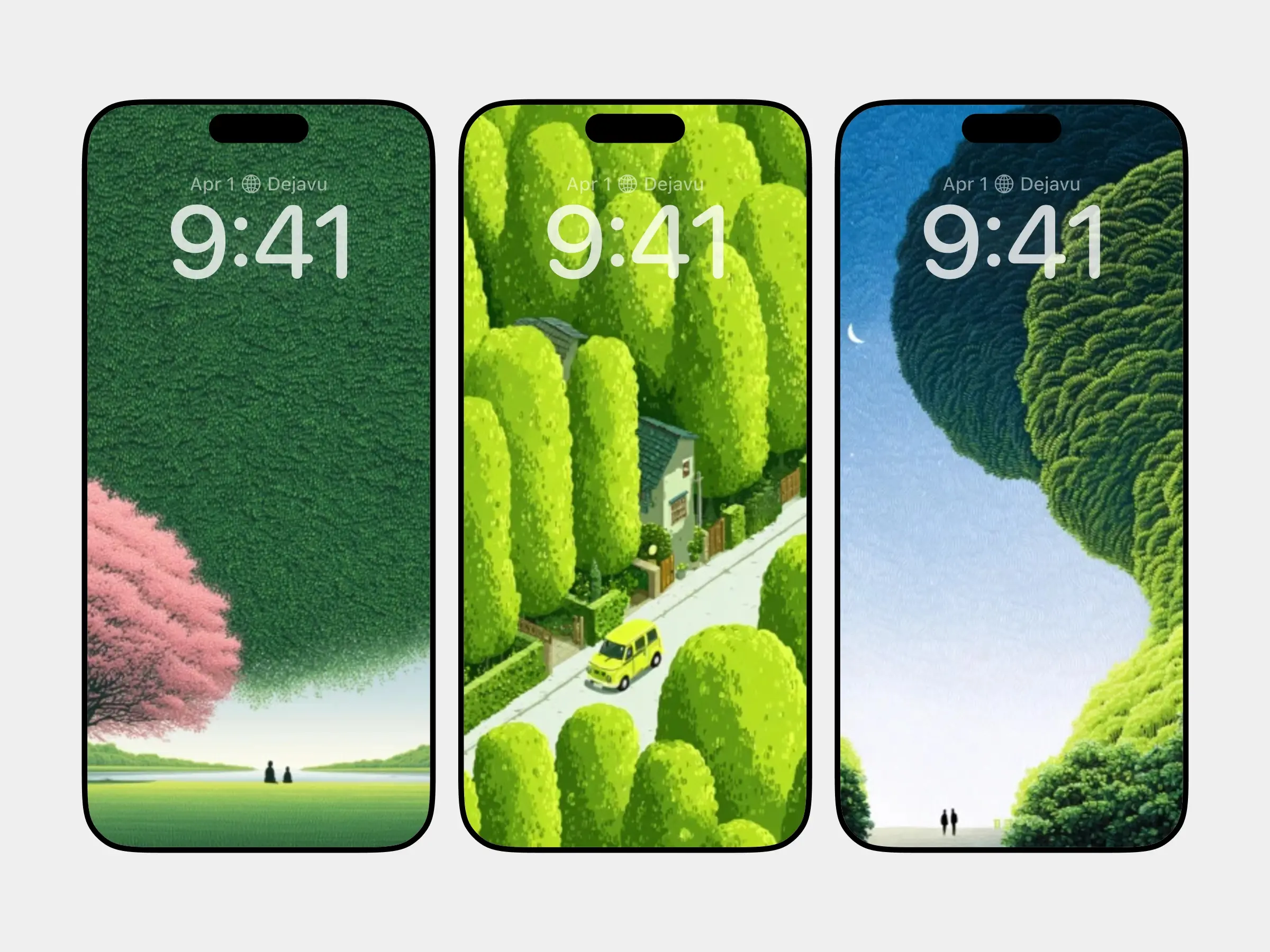

Nature’s Form captures the quiet dialogue between towering trees and solitary figures in minimalist landscapes. These scenes blend surreal geometry with emotional depth, offering a modern interpretation of natural serenity. Ideal for those seeking digital calm, the imagery emphasizes harmony, balance, and the subtle presence of humanity within vast green spaces.
You can download all these wallpapers on Dejavu Wallpaper!
Experience the magic of AI in advance! Let the infinite imagination of AI decorate your screens, bring you fresh delights every day.


Related Products


Above a land blanketed in green, trees grow in geometric forms, their foliage stacked like clouds, creating immense natural sculptures. They are not mere plants but architects of space, witnesses to time. Humans appear small beneath these giants, yet gain a quiet sense of belonging. People walk, ride bicycles, swing, or sit side by side, engaging in silent exchanges with nature. This interaction does not rely on language but communicates through presence itself. The silhouettes of trees define the world’s edges and reflect inner order. Each leaf resembles a tiny universe, carrying the passage of seasons and the breath of life. When one sits under a tree, gazing through layers of green, it feels like entering a meditative state—consciousness stretches, thoughts become light. This is not domination over nature, but integration—a resonance between body and environment, soul and earth.
The Geometry of Nature
Tree forms here display highly structured characteristics, as if precisely calculated. Circles, arcs, layered spherical crowns form an unreal harmony. This aesthetic does not imitate nature but distills its essence into visual symbols. Green dominates, yet varies from pale yellow-green to deep dark green, showing subtle shifts of light and shadow. Each tree resembles a miniature hill or dome, offering shelter and contemplative space below. This design language suggests nature is not chaotic but governed by internal logic and rhythm.
Modes of Human Presence
Figures remain secondary yet essential. Their actions are simple and ritualistic: two walking by a lake, one cycling through tree shadows, a girl swinging. These behaviors emphasize process and experience over speed or efficiency. The bicycle’s turning wheels symbolize continuity in daily life; the swing’s motion evokes childhood memory and longing for freedom. Their relationship with trees is mutual: trees provide shade and view, humans bring warmth and narrative. This balance reflects ecological ethics—humans are not masters of nature but participants within it.
Emotional Negative Space
Extensive negative space, especially between sky and ground, creates open visual pathways. This compositional choice directs attention toward the horizon, stimulating imagination. A crescent moon hangs in the night sky, clouds pile like cotton candy, water mirrors stillness. Together, they build a nearly Zen-like atmosphere, echoing Eastern philosophy’s concepts of ‘emptiness’ and ‘stillness.’ Emotions are not directly expressed but conveyed through composition, color, and proportion. Silence is more powerful than words; distance deeper than contact. In such environments, solitude ceases to be negative—it becomes an opportunity for self-dialogue.