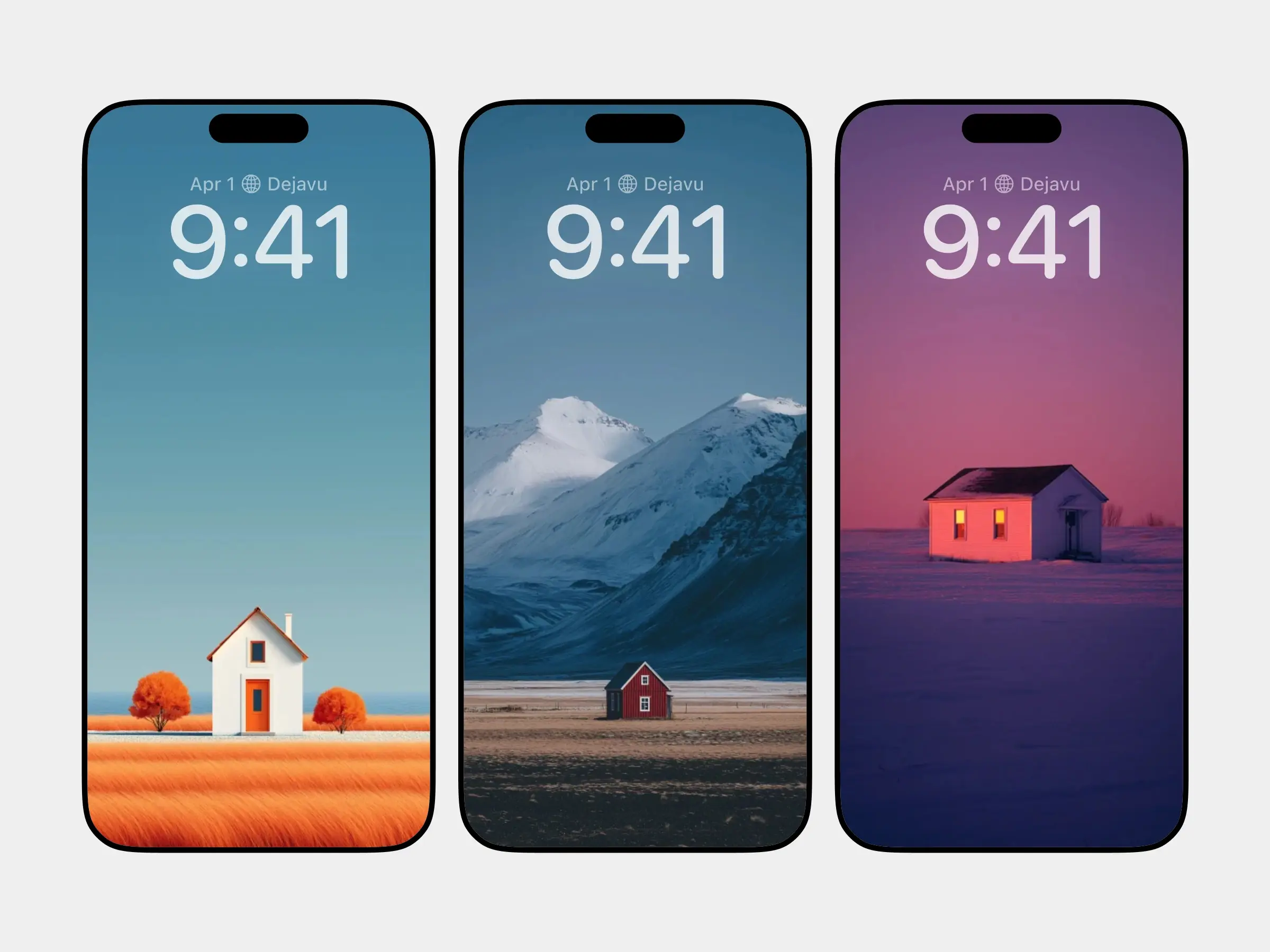
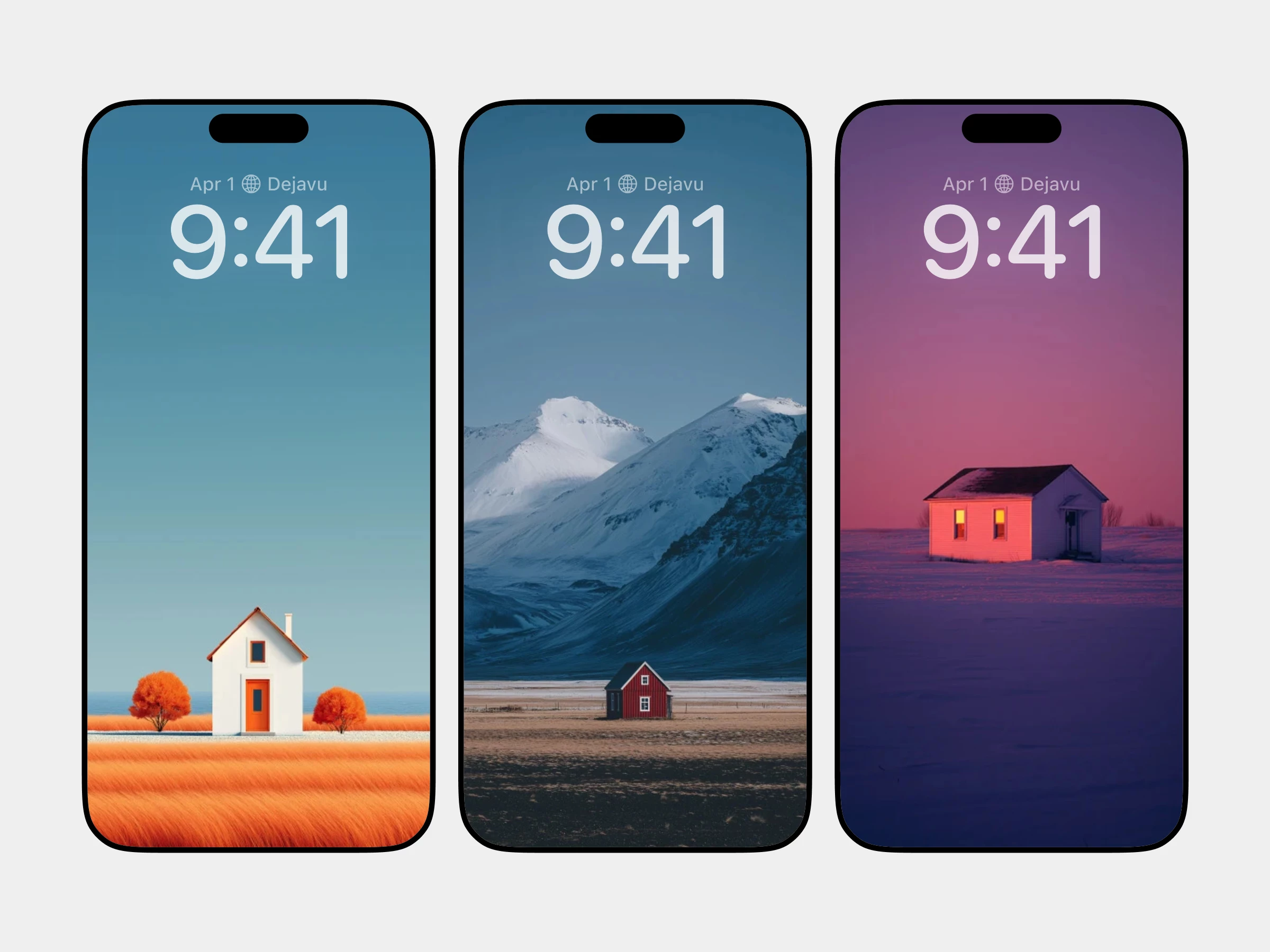
Minimalist architecture meets serene nature in these evocative scenes of solitary houses set against expansive landscapes. From snowy plains to autumn fields, each composition explores the emotional resonance of isolation, using bold colors and stark contrasts to convey quiet introspection. These images blend architectural simplicity with natural grandeur, inviting contemplation on solitude, presence, and the human condition.
You can download all these wallpapers on Dejavu Wallpaper!
Experience the magic of AI in advance! Let the infinite imagination of AI decorate your screens, bring you fresh delights every day.




In vast expanses, a single house stands alone. It does not follow urban grids nor hide within forests but asserts its presence through minimal scale against boundless nature. This isolation is not desolation but carefully composed stillness. Every color choice, every shadow cast, speaks of belonging and alienation. Architecture becomes symbol, carrying humanity’s primal longing for shelter. White walls reflect sky, orange doors ignite plains, red cabins appear like drops of blood before snow-capped peaks—these contrasts are not decoration but emotional revelation. The tension between spatial dominance and human fragility achieves visual equilibrium. When the house floats on paper, defying physics, it transcends physical dwelling and ascends into spiritual landmark. People seek solace in such imagery because loneliness itself is granted aesthetic value. It reminds that solitude need not be deficit, but may be a state closer to authenticity. The dialogue between structure and environment confirms existence silently.
Loneliness as Aesthetic
Loneliness is no longer seen as negative emotion but reinterpreted as aesthetic experience. When the house stands isolated, its mere presence becomes poetic. Stark color contrasts, extreme simplification of proportion—all serve this theme. It refuses integration, instead declaring self with boldness. This active separation reveals deep-seated desire for boundaries and autonomy. In an age of information overload, silence holds greater power than noise. The house’s existence resists overconnection.
Language of Color
Orange, red, white, black—these hues are not arbitrary. Each carries symbolic weight. Orange conveys warmth and hope, red signifies passion and warning, white denotes purity and void, black implies mystery and conclusion. Against different backdrops, they evoke varied emotional responses. For instance, warm-lit windows in snow both comfort and deepen solitude. Here, color functions not as visual element but as psychological projection.
Narrative of Space
Whether viewed from above or at eye level, space dominates perception. Land stretches to horizon, the house occupies only a fraction—this ratio emphasizes human vulnerability. Yet precisely this vulnerability highlights life’s preciousness. Vast emptiness is not nothingness but a vessel holding possibility. It invites speculation: who once dwelled here? Will someone return?
Spiritual Dimension of Architecture
Architecture exceeds utility, becoming spiritual anchor. It rejects complexity and luxury, using simplest forms to express deepest feelings. Roof slopes, window placements—each detail is deliberate. Behind this minimalism lies convergence of Eastern Zen and Western modernism. It tells no story, yet invites viewers to create their own. Thus, the house becomes collective memory’s anchor.