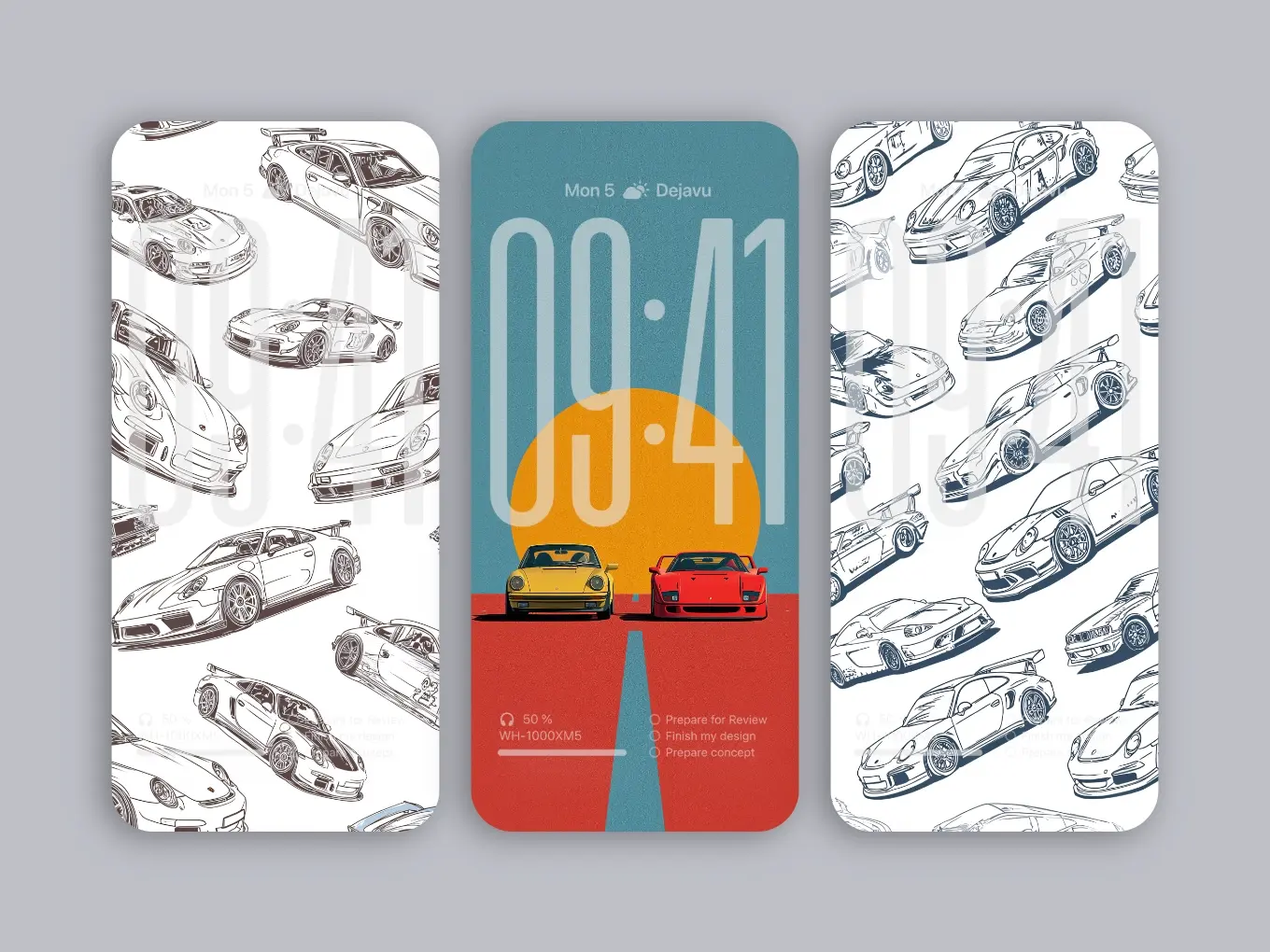

Feel the rush of motion even when your phone is still. The Aesthetics of Speed is a minimalist wallpaper collection that turns every screen into a gallery of sculpted velocity — where cars are not just machines, but living art forms carved by air and light. Inspired by the sleek lines of supercars and the calm balance of modern design, each wallpaper captures the poetry of motion in ultra-detailed 8K. Whether you’re using iPhone or Android, these images bring a quiet sense of power and precision to your device. Perfect for those who love speed, form, and the elegance of simplicity. Download and let your screen breathe the beauty of motion — fast, fluid, and timeless.
You can download all these wallpapers on Dejavu Wallpaper!
Experience the magic of AI in advance! Let the infinite imagination of AI decorate your screens, bring you fresh delights every day.


Human fascination with speed long predates the invention of the automobile. From Greek war chariots to Victorian steam trains, vehicles have always embodied both force and elegance. But cars are unique: they are not just machines of transport, but cultural icons. When a Mercedes, Porsche, or Ferrari roars across a highway, its aerodynamic silhouette and engine’s thunder are less a function than a performance—a sculpture in motion.
Ferrari F40: Why Was It Called a “Fighter Jet for the Road”?
Launched in 1987 to celebrate Ferrari’s 40th anniversary, the F40 was never intended for comfort. It was engineered purely for speed, built from carbon fiber and Kevlar—materials then reserved for aerospace. Capable of 324 km/h, it was a near-mythic achievement of its era. Stripped of air conditioning, trim, or luxury panels, the F40 embodied a radical philosophy: subtract everything unnecessary, let speed speak for itself. This “minimalist aesthetic” reshaped the design of all future supercars.
Porsche 911: Why Is It Called “Timeless Design”?
Unlike Ferrari’s radicalism, the Porsche 911 has thrived on continuity. Since 1963, its form—round headlights, curved body, rear engine—has barely changed. The inspiration came partly from the Volkswagen Beetle, whose creator Ferdinand Porsche carried forward its rounded simplicity. For six decades, the 911 has served as Porsche’s soul and one of the most instantly recognizable silhouettes in automotive history: a time capsule on wheels.
Racing Culture: How Did Speed Become a Social Language?
After World War II, racing evolved into modern spectacle. The 24 Hours of Le Mans and Formula One Grand Prix became more than contests—they became cultural stages for engineering, artistry, and courage. Italian Futurist painters once even declared: “Speed is more beautiful than the classical statue.” Racing was never just sport; it was modernity’s exhibition of velocity as art.
Speed and the City: Why Do We Love Street Racing Scenes?
From Tokyo’s neon boulevards to California’s sunset highways, racing cars have become cinematic shorthand for freedom and defiance. In 1980s California, underground street races fueled a booming tuner car industry, directly inspiring films and games—the foundation for The Fast and the Furious franchise. Street racing wasn’t just rebellion; it was cultural invention.
The Poetics of Motion
Cars are more than steel and rubber; they are artworks of engineering and emotion. Ferrari’s wild intensity, Porsche’s disciplined elegance, the roar of engines and sweep of lines—together they form a symphony of power. The aesthetics of speed reveal humanity’s eternal search for beauty and liberation within the machinery of modern life.