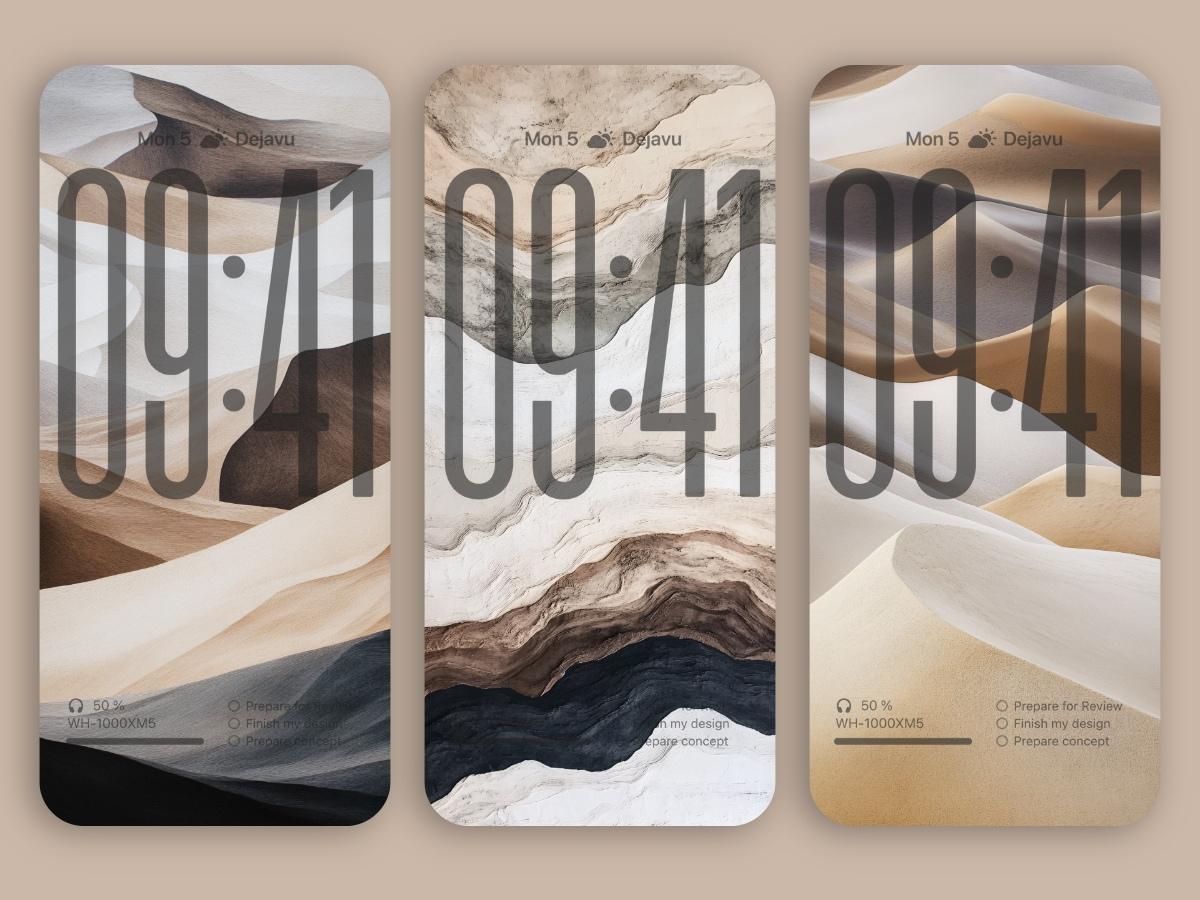

Upgrade your home screen with the serene elegance of The Poetry of the Earth: Stratigraphy — a minimalist 8K wallpaper collection inspired by the quiet power of nature’s layers. Designed to pair perfectly with iOS 26, these ultra-crisp wallpapers bring geological beauty into the digital age. Think earth-toned gradients, subtle strata, and flowing textures that mimic ancient rock formations, all refined into a sleek, modern look. Whether you’re rocking an iPhone or Android, these designs offer a sense of calm sophistication that turns your phone into a natural wonder. No clutter. No noise. Just pure, earthy minimalism in 8K resolution — sharp enough to make your lock screen feel like a digital art gallery. Perfect for fans of nature, minimal design, or anyone who just wants their phone to breathe a little. Let every glance at your screen feel grounded, balanced, and a little bit poetic.
You can download all these wallpapers on Dejavu Wallpaper!
Experience the magic of AI in advance! Let the infinite imagination of AI decorate your screens, bring you fresh delights every day.


Beneath our feet lies a layered manuscript — the earth’s silent memoir, written not in ink but in stone. These strata, stacked in timeworn procession, hold the weight of oceans vanished, of forests buried, of mountains that once dreamed skyward. Each layer is a whisper from deep time, a page from the planet’s enduring poem.
Strata do not form in haste. They are built grain by grain, over eons, as wind, water, fire, and gravity sketch their patient lines. Light-hued layers may speak of warm, quiet epochs; dark bands might recall violent upheaval — volcanic fire or tectonic fracture. These colors are not decorative. They are declarations of what the Earth has endured and witnessed.
To the geologist, a stratigraphic sequence is a code — one that unlocks secrets of ancient climates, ecosystems, and extinctions. A single layer may cradle a fossil: the delicate imprint of a fern, the arc of a shell, a trace of what once breathed. Through such remnants, we glimpse the tenacity and fragility of life, and the vast sweep of change.
Yet to the artist, the same strata are not data, but drama. They are rhythm and resonance, hue and grain. In the hands of painters and sculptors, sediment becomes symphony. They see not rocks, but ripples of memory — visual hymns to a planet that creates by layering, revising, and remembering.
But stratigraphy is not only geological. It is deeply human.
We, too, are layered beings. Our lives are built in sediment: seasons of joy, grief, silence, and becoming. Each triumph leaves a trace. Each sorrow, a shadow. Over time, these experiences settle, forming the personal topography of who we are.
Perhaps this is why the lines of the Earth move us. A gentle curve in sandstone might mirror a peaceful chapter. A sharp fracture may echo a rupture endured. And yet, in both — in calm and in breakage — there is beauty. There is becoming.
When we gaze upon the earth’s layered skin, we are not just reading a history of stone. We are reading a mirror. The Earth, in its endless patience, reminds us that transformation is not a flaw, but a form. That growth is slow, but sacred. That memory — whether held in rock or in heart — is what gives shape to meaning.
And so, as sunlight kisses the sediment and shadows fall into crevice and fold, we are invited to pause. To listen. To honor the stories beneath us — and within us.
For every life, like every landscape, is shaped not by a single moment, but by all that lies beneath. And through time, through pressure, through presence, we each become our own layered poem — quietly waiting to be read.