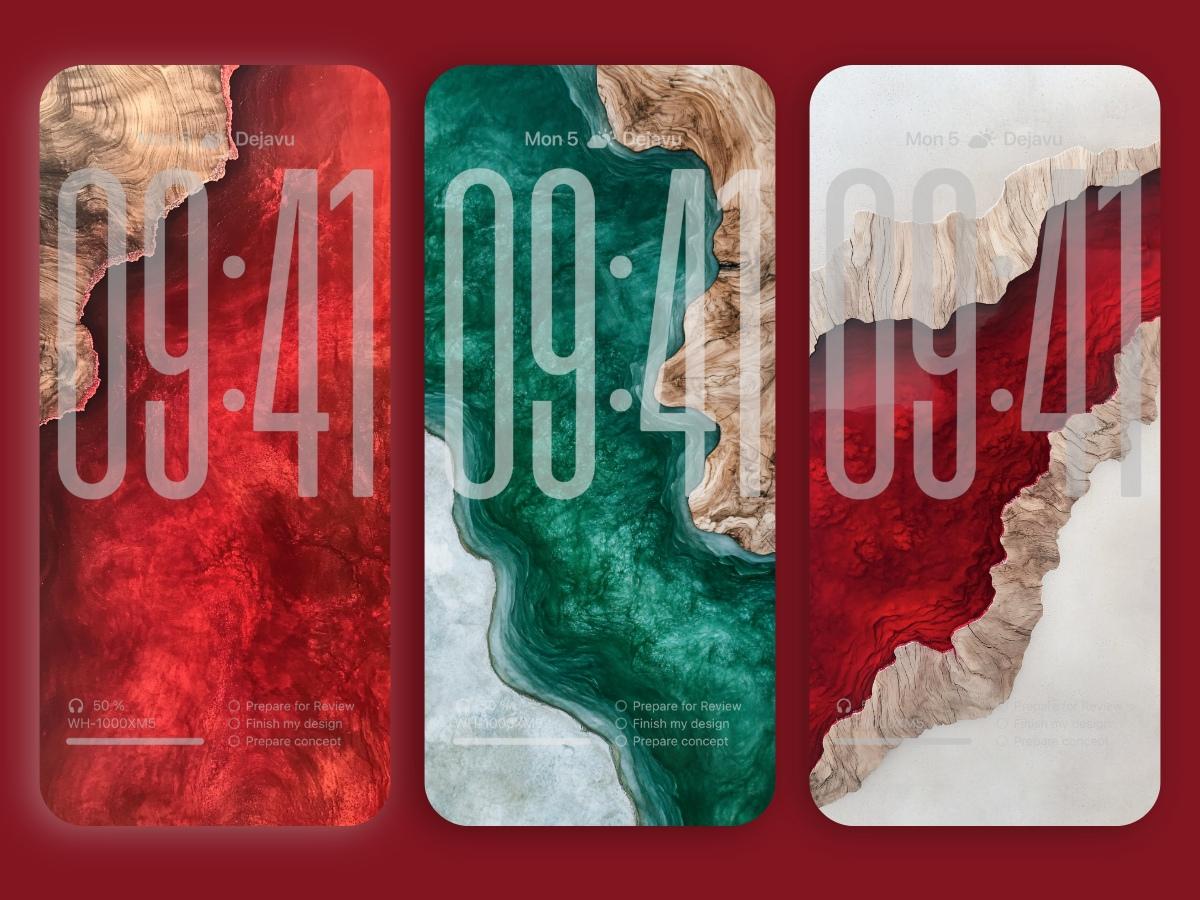

Elevate your screen with the Whispers of Resin collection — a stunning series of 8K minimal phone wallpapers designed for iOS 26 and Android users who crave both simplicity and soul. Inspired by the quiet conversation between wood, stone, and time, these wallpapers blend natural textures with modern minimalism. Each piece feels like a frozen breath of nature, where resin veins flow through fossil-like wood or polished marble meets ancient grain. Whether you’re unlocking your phone during a morning coffee or escaping into thought during a busy day, this collection adds a quiet moment of calm to your digital life. Perfect for fans of earthy aesthetics, clean design, and ultra-HD clarity, these wallpapers are tailor-made to complement the sleek vibe of the newest iPhone or Android models. It’s not just a background — it’s an atmosphere. Download now and let your device whisper stories carved from time itself.
You can download all these wallpapers on Dejavu Wallpaper!
Experience the magic of AI in advance! Let the infinite imagination of AI decorate your screens, bring you fresh delights every day.


In the remote forests of the southern hills, an olive tree has fallen. Its rings are clear as a melody, each curve recording a silent dialogue between sunlight and storm. Just as it’s about to return to the earth, a craftsman intervenes — not to preserve it as it was, but to give it a second life through the medium of resin.
But what exactly is resin?
More than a modern industrial material, resin has long been revered as nature’s alchemical gift. The ancient Egyptians used it to seal their dead in eternity. The Maya painted sacred altars with it. Even amber — fossilized resin from tens of millions of years ago — is time crystallized. Today, most resins used in crafts are synthetic: epoxy or polyester blends that pour as liquid and harden like glass. When fused with wood, they resemble cross-sections of geology or brushstrokes of watercolor — an uncanny blend of precision and flow.
And yet, did you know the idea of combining resin and wood began with a kitchen accident?
In the 1950s, a German woodworker spilled syrup on a wooden board while cooking. Assuming it was ruined, he set it aside. Days later, he was surprised to find the syrup had hardened into a glossy surface, beautifully merging with the wood grain. This accident inspired him to replicate the effect using clear epoxy — a moment of domestic serendipity that sparked a new chapter in furniture and art.
Resin is not merely a medium of beauty — it is also a master of repair.
In the world of restoration, craftsmen use resin to heal what wood has lost: cracks, holes, the bite of time. But resin does more than fill gaps — it transforms them. It makes absence visible, turning flaw into feature. Like kintsugi with lacquer and gold, resin renders imperfection into story.
Today, we see works that resemble satellite imagery, coastal shorelines, volcanic textures — formed where resin flows into the natural breaks of timber. Artists pour pigment-rich resin into fissures, crafting rivers, clouds, even imagined strata of mineral earth. These pieces feel less like static objects, and more like paused geologies — wood and resin in silent collaboration.
Some call this art “liquid time” — and rightfully so.
Because in a single surface, you can read both the age of the tree and the illusion of stone being born. You see growth rings and tectonic shimmer, resin veins like lava cooling in place. In a way, it’s the reconciliation of two timescales: organic and mineral, slow growth and sudden freeze. It’s where craft becomes archive — and chemistry becomes poetry.
Next time you see a tabletop glowing with green swirls or sapphire transparency, imagine this: it may not just be furniture.
It might be a quiet conversation — between forest and rock,
between what once grew and what now endures,
flowing silently in the canopy of time.