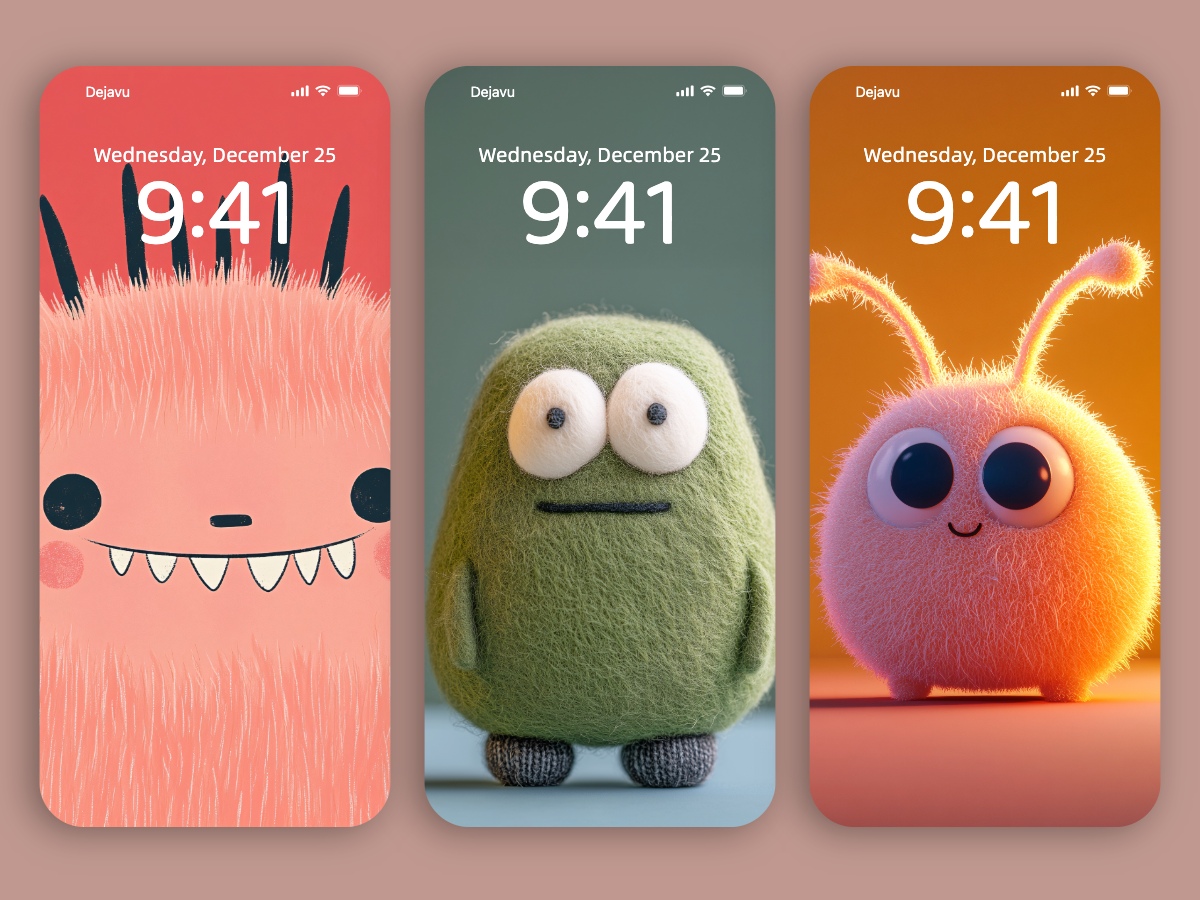

Why are 3D fuzzy characters so irresistibly cute? It’s all in the fluff! These playful little beings, with their round shapes, squishy textures, and oversized eyes, evoke instant joy. Now, you can bring that charm straight to your phone with our 3D Fuzzy Characters minimal wallpapers in stunning 8K. Each design is a delightful blend of soft pastel hues and cozy textures, perfect for adding a splash of cuteness to your screen. Whether it’s a mischievous fluffball bouncing in mid-air or a sleepy fuzzy friend wrapped in a tiny blanket, these wallpapers will have you smiling every time you unlock your phone. Ideal for iPhone and Android users alike, they deliver high-resolution charm without overwhelming your home screen. Ready to make your device as cuddly as a cloud? Download now and let these adorable 3D companions brighten your day!
You can download all these wallpapers on Dejavu Wallpaper!
Experience the magic of AI in advance! Let the infinite imagination of AI decorate your screens, bring you fresh delights every day.


Ever found yourself completely charmed by the soft and squishy vibes of 3D characters like Sulley from Monsters, Inc., the adorable alpaca from Pixar shorts, or those wobbly little beans in Fall Guys? You’re not alone! These fluffy, round, and oh-so-huggable characters aren’t just cute—they’re riding a wave of tech innovation, psychological magic, and pop culture trends that make them practically impossible to resist. Let’s dive into what makes them so darn lovable!
Why Do We Love That Fuzzy Texture So Much?
Humans are wired to adore soft things—it’s in our DNA! Back in our caveman days, soft and warm often meant safe and cozy, which is why even now, a fuzzy blanket or a plush toy can bring instant comfort. Our brains get a little hit of happiness from just seeing fluffy textures. That’s why 3D designers love giving virtual characters a soft, touchable look—it makes them instantly more likable!
Fun fact: Scientists once did an experiment where people touched different textures and then measured their moods. Those who got to feel soft, fluffy things (like velvet or cotton) became friendlier and more trusting. No wonder brands like Coca-Cola (hello, polar bears!) and Disney lean into the fluffy factor for their mascots.
How Do 3D Animators Make Fur Look So Real?
Back in the old-school days of 2D animation, like The Lion King or Aladdin, characters were charming but definitely lacked the “pettable” factor. Enter 3D animation! When Pixar unleashed Monsters, Inc. in 2001, the world got its first real taste of ultra-realistic fur. Sulley’s shaggy coat boasted a jaw-dropping 2.3 million individual hairs, each moving independently with the wind, gravity, and even moisture. It took hundreds of hours to render just a single frame—talk about dedication!
Today, with advancements in Physically Based Rendering (PBR) and real-time fur simulations, modern 3D characters not only look soft but react to light and movement with crazy realism. Take Sonic the Hedgehog in his recent movie debut—his fur fluffed up with static and rippled in the wind, adding that extra layer of believability. It’s these tiny details that draw us deeper into their world.
How Did Fuzzy Characters Take Over Pop Culture?
These digital fuzzballs aren’t just hanging out in movies and games anymore—they’re trending everywhere, from social media to the metaverse! Here’s a look at how they’re winning hearts:
- Virtual YouTubers (VTubers): In Japan, VTubers like Hololive’s Korone (a dog-like, fluffy avatar) are huge! Their fuzzy looks, combined with engaging personalities, make fans go wild.
- Video Game Darlings: Games like Fall Guys and Kirby use round, plush designs to boost player affection. Their squishy appearances lower any sense of threat and enhance emotional connection.
- AI and the Metaverse: Brands are creating fuzzy virtual mascots to engage digital audiences. Companies like Nike have experimented with virtual pets, and some tech firms are developing AI companions with fuzzy exteriors that you can actually interact with emotionally.
What’s Next for 3D Fuzzy Characters?
With breakthroughs in real-time rendering and AI-driven animation, the future of 3D fuzzy characters is looking softer than ever! Imagine owning a digital pet that not only reacts to you on screen but also feels “real” through VR or AR technology.
Even cooler, companies in Japan are working on ultrasonic haptic technology, which can create the sensation of fur in mid-air. This means you could actually “pet” a virtual creature and feel its softness—how wild is that? The idea of being able to cuddle up to a digital furball in the metaverse is no longer just sci-fi fantasy.
The Fuzzy Finale
3D fuzzy characters aren’t just a fleeting trend—they’re a delightful blend of psychology, animation tech, game design, and social culture. Whether they’re chilling in the virtual world or starring in brand campaigns, these fluffy friends are here to stay, bringing joy and warmth wherever they go. So, next time you catch yourself “aww-ing” over a digital fluffball, remember—there’s a whole world of technology and creativity making that cuteness possible!