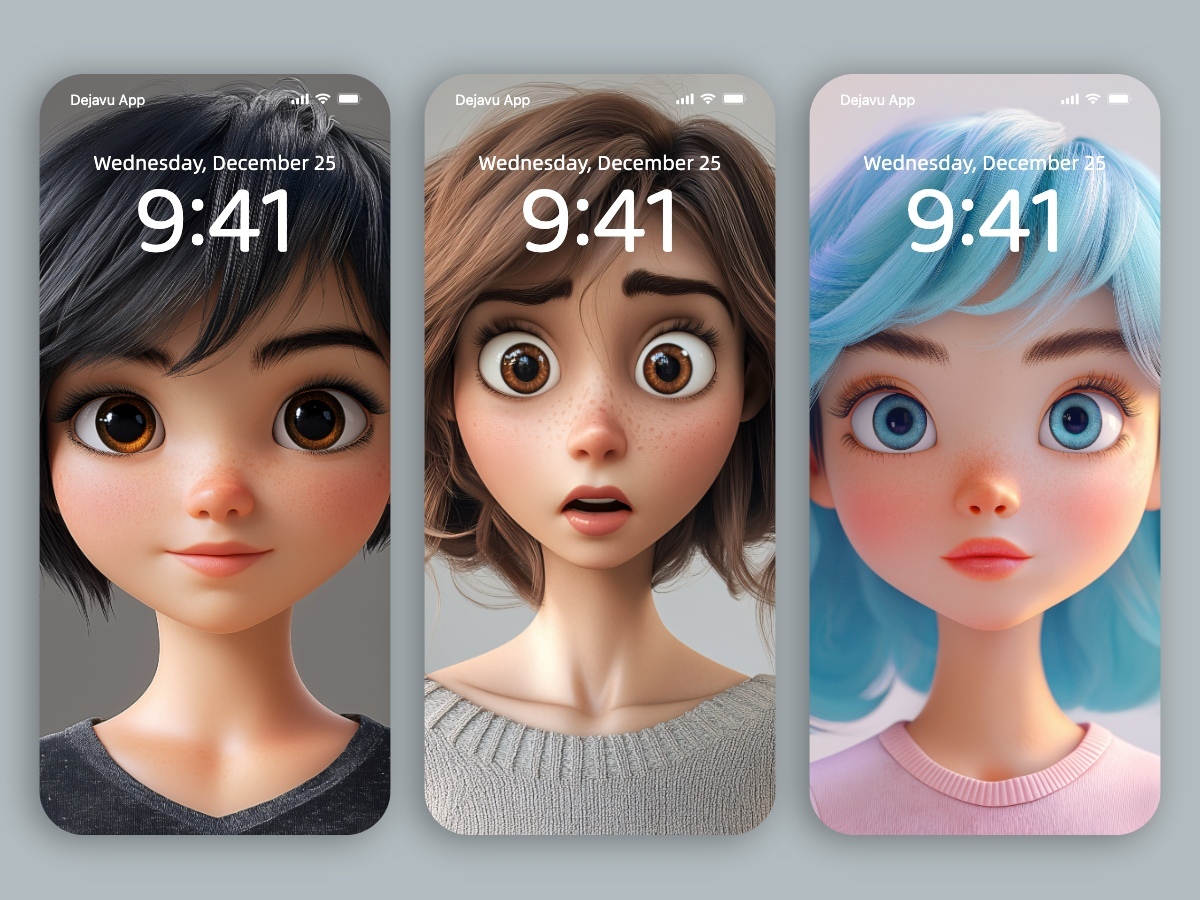

Dive into the enchanting world of 3D cartoons with our Cute Cartoon Girls phone wallpapers in stunning 8K! Inspired by the heartfelt charm of Pixar and Disney, these wallpapers bring adorable characters to life with vivid colors and expressive details. From whimsical smiles to wide-eyed wonder, each cartoon girl captures the magic of storytelling that makes animated films so unforgettable. Perfect for iPhone and Android, these wallpapers add a splash of joy to your screen, making every glance a little more magical. Feel the nostalgia of childhood adventures, the thrill of fantastical worlds, and the warmth of characters that seem to leap right from the screen. Whether you’re a fan of iconic classics or modern animated masterpieces, these designs celebrate the artistry behind every Pixar and Disney moment. Ready to add a dose of animated charm to your device? Download now and let the magic follow you wherever you go!
You can download all these wallpapers on Dejavu Wallpaper!
Experience the magic of AI in advance! Let the infinite imagination of AI decorate your screens, bring you fresh delights every day.


Ever found yourself tearing up over a Pixar or Disney film? Maybe it was Riley’s emotional rollercoaster in Inside Out or Baymax’s heartwarming hug in Big Hero 6. But what makes these 3D animated characters feel so incredibly real? How do their expressions connect with us even more deeply than some live-action performances? The answer lies in the secret magic of animation.
How Do Pixar and Disney Make Their Characters So Expressive?
Since Pixar’s founding in 1986, the studio has been obsessed with making CGI characters look as lifelike and emotionally compelling as possible. And the secret ingredient? Facial expressions.
Pixar animators have revealed that each character has over 3,000 adjustable facial parameters, from the curve of an eyebrow to the subtle twitch of a lip. Since human emotions are primarily expressed through facial muscles, Pixar meticulously designs each character’s digital “muscles” to convey the most precise and heartfelt expressions.
Take Baymax from Big Hero 6, for example. He doesn’t even have a mouth—yet we instantly understand his emotions. How? By focusing on small yet powerful visual cues like eye shape and body movements, the animators managed to create one of the most emotionally resonant robots in animation history.
How Does Disney Make Their Cartoons Feel “Alive”?
Disney’s 3D characters feel like they have a soul, and that’s no accident. They follow a concept known as Performance Animation, a principle first championed by legendary Disney animators Frank Thomas and Ollie Johnston in the 20th century and later refined for CGI animation.
The core philosophy? Animation isn’t just about movement—it’s about acting. Disney’s 12 Principles of Animation play a key role, but two of the most crucial for expression are:
- Exaggeration: Characters display emotions in a way that’s more dramatic than real life. A shocked character’s eyes might balloon beyond normal proportions, making their emotions instantly readable.
- Anticipation: Before an action happens, there’s a subtle pre-movement—like bending knees before a jump or a slight mouth twitch before a laugh. These tiny details create a sense of natural flow and make characters more immersive.
That’s why Disney animations feel so smooth—each motion follows the same unspoken body language rules we instinctively recognize in real life.
The Hidden Secrets of 3D Animation
Many people assume 3D animation is just about computers generating movements, but that’s far from the truth. Pixar and Disney animators handcraft every single expression and motion.
Each frame undergoes “keyframe adjustments,” meaning animators manually tweak crucial expressions or gestures before letting software fill in the gaps. But it doesn’t stop there—Pixar often records real actors’ facial expressions to ensure authenticity.
For Inside Out, animators studied kids watching movies and laughing at jokes, analyzing every natural reaction. Even the way Nick Wilde’s ears twitch in Zootopia is based on real fox behavior! Pixar’s animators even study psychology and anatomy to make sure every character’s movement feels biologically accurate.
Will 3D Cartoons Become Too Realistic?
With AI and deep learning advancing rapidly, technologies like Deep Facial Animation now allow computers to automatically transfer real human expressions onto animated characters in real time. This means future animations could be indistinguishable from real-life actors.
But here’s the catch—if a character looks too real yet slightly “off,” it enters the uncanny valley, making viewers uncomfortable. That’s why Pixar and Disney intentionally keep a balance between realism and stylization, ensuring their characters remain expressive without becoming unsettlingly lifelike.
What Gives 3D Cartoons Their “Soul”?
At the end of the day, 3D animation isn’t just about flashy graphics—it’s about storytelling and emotional connection. From Toy Story to Elemental, Pixar and Disney continue to push the boundaries of what animated characters can express.
So next time you watch a Pixar or Disney film, pay close attention to how a character blinks, smiles, or gasps. You might just catch a glimpse of the magic that makes them feel truly alive.