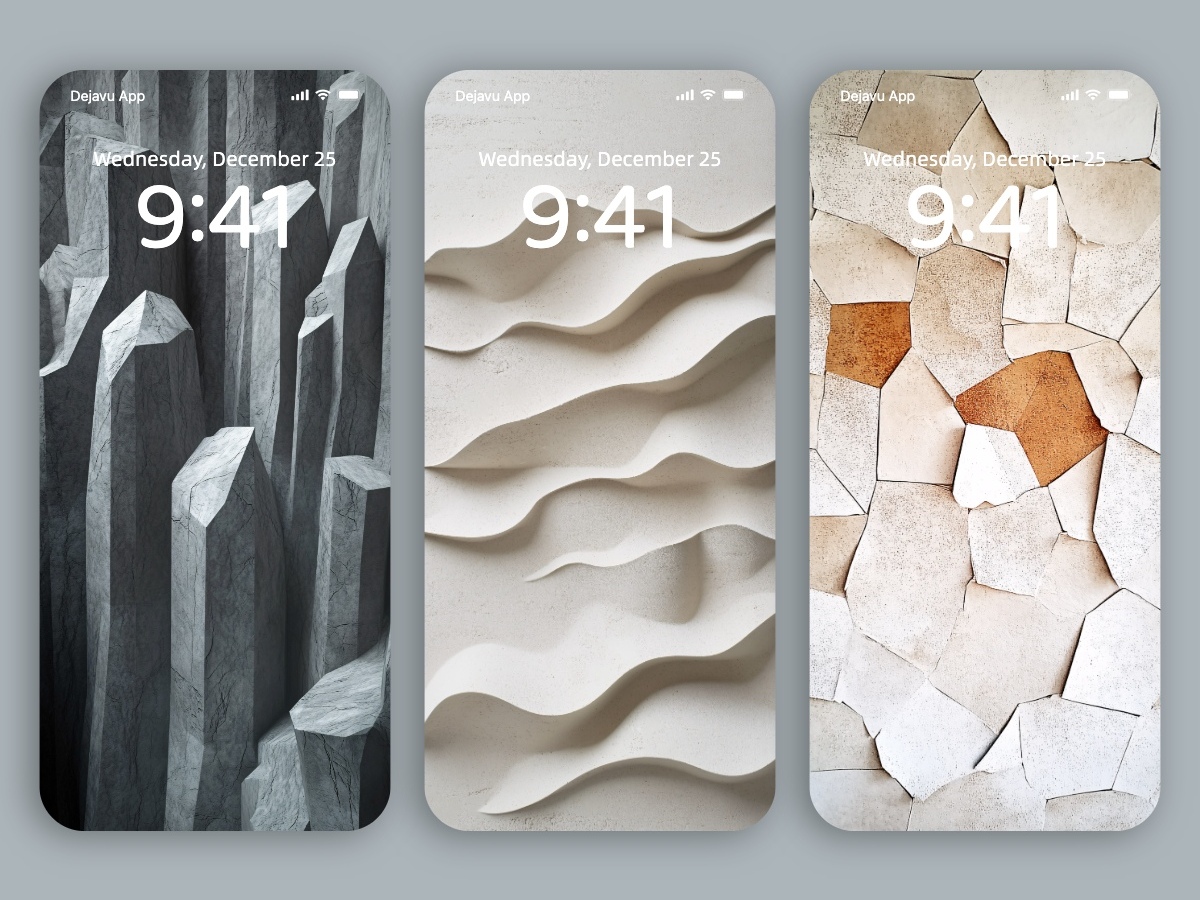

Unlock the secrets of design with The Secret Code of Geometry: Hidden Rules in Architecture phone wallpapers! These stunning 8K textures are more than just patterns — they’re a celebration of the intricate math and harmony that shape our world. From mesmerizing tessellations to minimalist line art, each wallpaper whispers stories of ancient builders and modern innovators. Imagine tracing the golden ratio spirals on your screen or marveling at the perfect symmetry of Islamic mosaics. Whether you’re an architecture enthusiast, a design lover, or simply in search of something uniquely stylish, these geometric patterns add a sense of balance and sophistication to your device. Compatible with both iPhone and Android, these wallpapers transform your screen into a canvas of mathematical beauty. Tap into the elegance of geometry and carry a piece of architectural wonder wherever you go. Ready to decode the hidden rules? Your digital masterpiece awaits!
You can download all these wallpapers on Dejavu Wallpaper!
Experience the magic of AI in advance! Let the infinite imagination of AI decorate your screens, bring you fresh delights every day.


In the concrete jungles of modern cities, we’re surrounded by straight lines and sharp angles. We work in glass-covered skyscrapers, walk on neatly arranged square tiles, and live in boxy apartments. But have you ever wondered why architecture is so obsessed with geometric shapes? Is it just about aesthetics, or is there a deeper mystery hidden in those lines and patterns?
Architects: The Master Thieves of Nature
Of all art forms, architecture is the one that flirts with mathematics the most. And believe it or not, many of its geometric inspirations come straight from nature.
Take the elegant spiral of a seashell—it follows the golden ratio (Φ ≈ 1.618), the same proportion found in galaxies, sunflower seed patterns, and even human DNA. Legendary architect Antoni Gaudí knew this well. When designing Barcelona’s iconic Sagrada Família, he masterfully incorporated these proportions, making the structure look as if it had naturally grown out of the earth.
Then there’s the ultra-modern low-poly (Low Poly) architectural style—those sharp, faceted buildings that look like giant origami sculptures. While they may seem like futuristic experiments, their roots go all the way back to the Bauhaus movement of the early 1900s. Bauhaus architects championed functionality and mathematical precision, turning geometry into the building blocks of modernist design.
The Hidden Math in Walls and Towers
Ever stared at a skyscraper and noticed its façade isn’t just a plain surface? Instead, it’s often made up of repeating patterns—hexagons, cubes, triangles—all carefully arranged like a giant puzzle. These patterns aren’t just for show; they’re mathematical solutions for stability and efficiency.
Take the hexagon, for example. It’s nature’s favorite shape, found in honeycombs because it offers maximum strength with minimal material. Architects use hexagonal grids to build stronger, more sustainable skyscrapers while reducing material waste.
Then there’s origami geometry—a rising trend in architecture where buildings mimic folded paper structures. Japanese architect Kengo Kuma has taken this to the next level, using folded triangular panels to create dynamic, wave-like facades. Beyond looking stunning, these folds actually help buildings resist earthquakes by dispersing external forces.
The Future of Architecture: When AI Meets Geometry
If you think today’s geometric buildings are all about human creativity, think again. AI and computer algorithms are now reshaping architecture, generating optimized geometric designs that would be impossible to calculate manually.
A perfect example? The flowing, futuristic buildings from Zaha Hadid Architects. Their designs, guided by AI-powered parametric design, create structures that look more like liquid metal than solid concrete. Instead of static, rigid forms, these buildings evolve like living organisms.
And in the not-so-distant future, buildings might not even stay in one shape! Enter adaptive architecture—where walls and roofs can expand, contract, or reshape themselves depending on sunlight, wind, or energy needs. NASA is already exploring this concept for Mars habitats, proving that one day, our buildings might be as flexible as Transformer robots.
Geometry: The Hidden Magic of Our Cities
Buildings may seem motionless, but they’re actually in a constant dialogue with math, physics, and the natural world. Geometry doesn’t just shape their appearance—it determines their strength, energy efficiency, and even how comfortable they feel inside.
So next time you walk into a beautifully designed building, take a moment to look around. You might just uncover the secret mathematical code hidden in its walls. Who knows? Maybe the city you live in is already a giant geometric puzzle waiting to be solved.