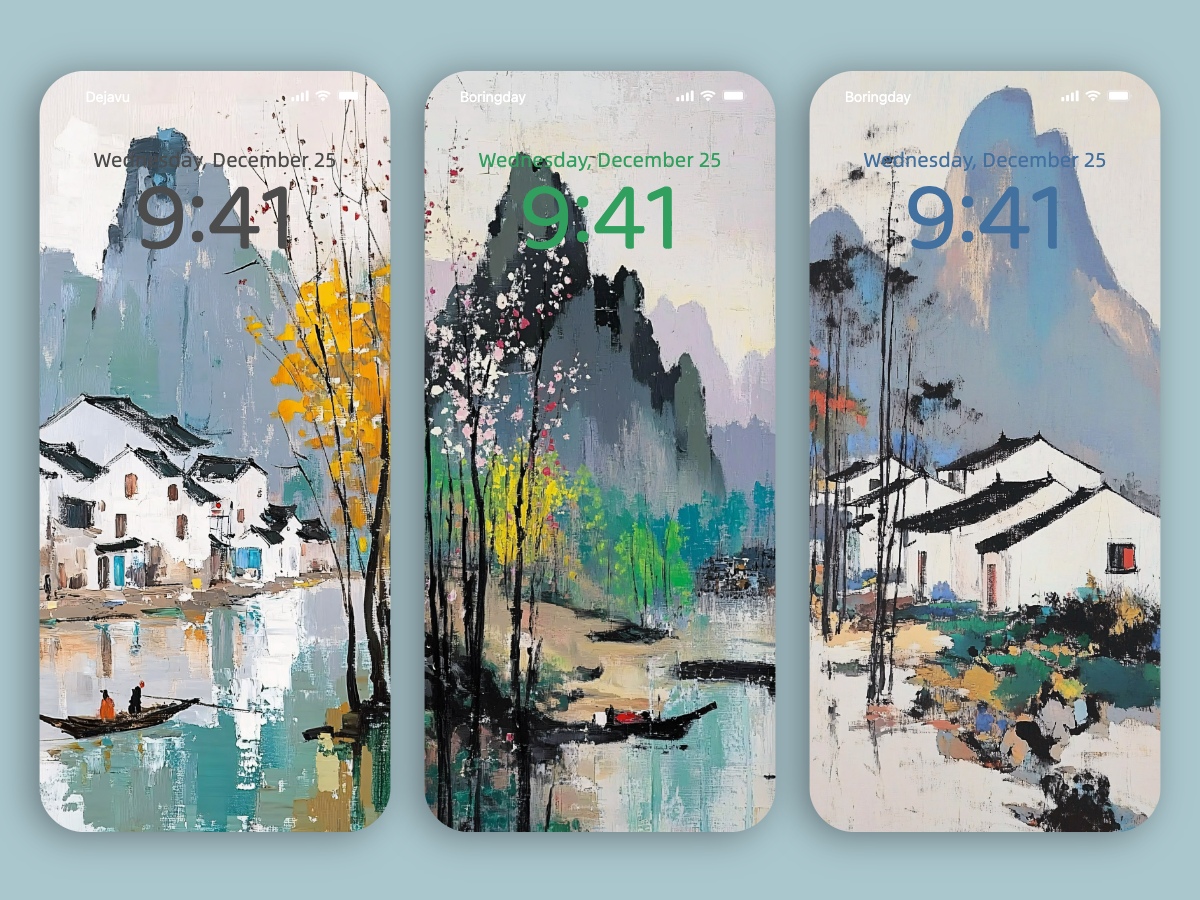

Wu Guanzhong’s watertown landscape paintings are like poetic love letters to China’s ancient water towns. With a masterful blend of traditional Chinese ink painting and modernist abstraction, Wu captured the charm of these tranquil villages with their arched stone bridges, winding canals, and whitewashed houses. His signature style, marked by bold splashes of color and expressive brushwork, turns these serene sceneries into vibrant dreamscapes.
Instead of focusing on precise details, Wu’s art breathes life into the mood and spirit of the towns. The rippling reflections in the water, the lively curves of the bridges, and the playful balance of light and shadow all come together in a harmonious dance of simplicity and sophistication. It’s as if he invites viewers to stroll through these towns, feeling the gentle breeze and hearing the whispers of history.
Wu Guanzhong’s watertown paintings remind us that beauty lies in the interplay of tradition and innovation. His works are not just paintings—they’re journeys into the soul of China’s cultural heritage, seen through the lens of an artist who believed that art should touch the heart, not just the eyes.
You can download all these wallpapers on Dejavu Wallpaper!
Experience the magic of AI in advance! Let the infinite imagination of AI decorate your screens, bring you fresh delights every day.


Jiangnan watertown—a dreamy, picturesque paradise that lives in the hearts of many. Through his masterful brushwork, Wu Guanzhong brought this serene yet vibrant world to life. Balancing the ethereal beauty of traditional ink painting with the vivid charm of color, Wu’s art offers a feast for the eyes and a journey for the soul.
What Makes Wu Guanzhong’s Art Unique?
Wu Guanzhong was a genius who blended the poetic essence of traditional Chinese aesthetics with the bold expression of Western modern art. While rooted in the meditative spirit of Chinese ink painting, his works break free from convention with vibrant colors and dynamic compositions. To Wu, colors were like musical notes and brushstrokes the melody, orchestrating lively rhythms that pulse through his paintings. His Jiangnan is no longer just black and white—it’s a kaleidoscope of life and emotion.
Why Was Wu Guanzhong Drawn to Jiangnan Watertowns?
Jiangnan, the land of canals, arched bridges, and white-walled houses, was Wu Guanzhong’s eternal muse. Born in this poetic landscape, he carried a deep affection for its beauty. His paintings capture the dreamy reflections of willow trees in the water, the gentle ripple of boats gliding through narrow rivers, and the timeless charm of stone bridges. Wu once said, “The beauty of a landscape lies in the emotions it evokes.” His art becomes a love letter to his homeland, a bridge between personal nostalgia and universal appreciation.
How Did Wu Merge Ink and Color So Seamlessly?
Wu Guanzhong revolutionized traditional ink painting by adding a splash of bold color to its restrained elegance. Reds, yellows, and greens dance across his canvases, breathing life into his scenes without overshadowing the meditative “emptiness” of traditional ink. A single red tree leaning over a river can transform an entire composition, while his simple strokes and textured color blocks recreate the flow of Jiangnan’s waters and mountains. Wu’s use of color isn’t about extravagance—it’s about harmony, accentuating the emotional resonance of his work.
Why Are Wu’s Paintings So Valued?
Wu’s paintings of Jiangnan are more than just art—they’re cultural milestones. His innovative style bridged the gap between the introspective “xieyi” spirit of Chinese landscape painting and the bold abstraction of Western art. This fusion of tradition and modernity created a fresh, expressive voice that resonated globally. Wu’s Jiangnan isn’t just a scenic tribute; it’s a reflection of his emotions, his heritage, and his vision of a timeless cultural identity.
In Wu Guanzhong’s Jiangnan, every stroke tells a story, every color evokes a feeling, and every piece breathes new life into ancient beauty. He didn’t just paint a watertown—he immortalized it, crafting an enduring symbol of natural splendor and cultural pride. Through his art, Jiangnan becomes more than a place; it’s an everlasting memory, alive in the hearts of all who admire his work.