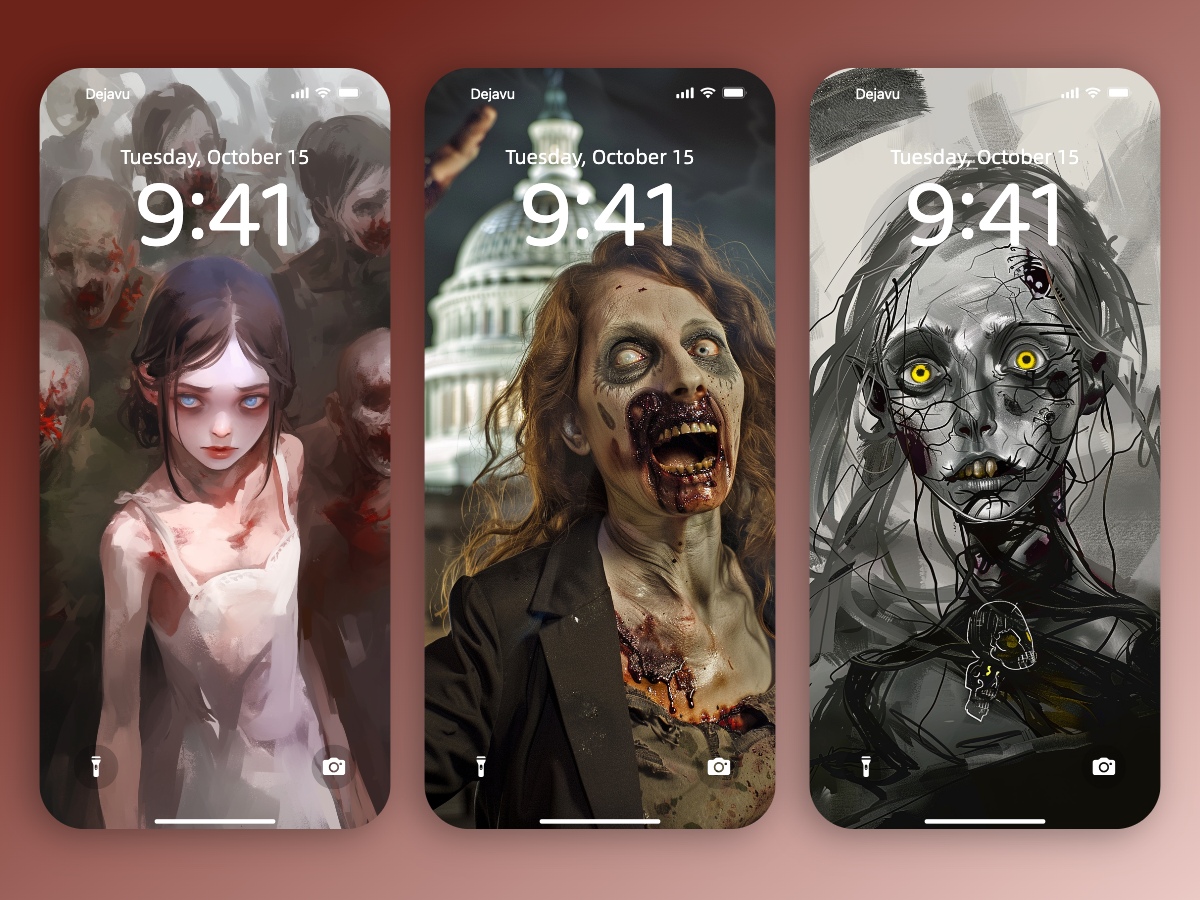

A Zombie Halloween is all about bringing a spooky, undead twist to the classic Halloween celebration! Picture creepy decor with broken tombstones, eerie fog, and plenty of green and gray lighting to create a graveyard vibe. Zombie costumes often involve torn clothes, eerie makeup, and faux blood to give the appearance of the recently reanimated.
For Halloween parties, popular zombie-themed activities might include “zombie tag,” survival games, or even a “zombie crawl” where everyone does their best undead shamble. Zombie-inspired snacks can add to the ambiance too, like “brain” cupcakes or “severed finger” breadsticks. From movies and games to costumes and decorations, a Zombie Halloween is the perfect blend of fright and fun, capturing the classic undead horror we know and love. 🧟♂️🎃
You can download all these wallpapers on Dejavu Wallpaper!
Experience the magic of AI in advance! Let the infinite imagination of AI decorate your screens, bring you fresh delights every day.


What is the definition of a zombie?
In English, a zombie typically refers to a fictional creature that is a reanimated corpse—someone who has died and then been brought back to life but without normal human qualities. In most stories, zombies lack independent thought and human emotions, often moving slowly and acting on primal instincts. They’re commonly portrayed as relentless and dangerous, known for attacking humans and even consuming flesh in horror films and literature. Zombies are a staple in horror genres, symbolizing loss of humanity or societal fears, and appear in countless movies, games, and shows worldwide.
Where did zombies come from?
The concept of the zombie has roots in the Haitian Vodou religion, where zombi referred to a corpse reanimated through magical means, typically controlled by a sorcerer, or bokor. In Haitian folklore, these zombies were believed to be soulless, serving as puppets for their master’s bidding. This idea was brought to Western audiences in the early 20th century through sensationalized accounts and stories.
The modern fictional zombie, however, was primarily shaped by American filmmaker George A. Romero, whose 1968 film Night of the Living Dead introduced a new type of undead creature. Romero’s zombies were mindless, flesh-eating beings that threatened humanity on a large scale, introducing themes of apocalypse, survival, and social critique. His depiction set the foundation for the zombies seen in today’s horror fiction, where they symbolize fears of uncontrollable disease, loss of identity, and societal breakdown.
What are some zombie films?
Zombie films have become a significant genre in cinema, characterized by their portrayal of the undead and the societal collapse that often accompanies their emergence. Here’s a summary of some of the most notable zombie movies, highlighting their unique contributions to the genre.
Classic Zombie Films
- Night of the Living Dead (1968): Directed by George A. Romero, this film is credited with establishing the modern zombie genre. It features a group of people trapped in a farmhouse, fighting off hordes of flesh-eating zombies. Its social commentary and innovative use of horror elements set a precedent for future films[3][4].
- Dawn of the Dead (1978): Another Romero classic, this sequel expands on the zombie apocalypse theme, focusing on survivors trapped in a shopping mall. It combines horror with satirical commentary on consumerism and societal norms[2][5].
- Return of the Living Dead (1985): This film introduced the concept of zombies craving brains specifically and added a comedic twist to the genre. It is known for its punk rock aesthetic and memorable one-liners[3].
Modern Favorites
- 28 Days Later (2002): Directed by Danny Boyle, this film redefined zombies as fast-moving infected individuals rather than slow shamblers. It explores themes of isolation and survival in a post-apocalyptic world[4][5].
- Train to Busan (2016): A South Korean film that takes place on a train during a zombie outbreak. It’s praised for its emotional depth and intense action sequences, making it one of the best-reviewed zombie films in recent years[2][4].
- Zombieland (2009): A comedic take on the zombie apocalypse, featuring Jesse Eisenberg and Woody Harrelson. The film is known for its humor, memorable rules for survival, and engaging characters[2][4].
Unique Entries
- Shaun of the Dead (2004): This British comedy blends humor with horror, following an underachiever trying to win back his girlfriend amidst a zombie outbreak. It’s celebrated for its clever writing and character development[4][5].
- World War Z (2013): Starring Brad Pitt, this film presents a global perspective on a zombie outbreak, showcasing large-scale chaos and action sequences that differ from traditional horror settings[2][5].
- The Girl with All the Gifts (2016): A unique take on the genre featuring a young girl who is part zombie but retains human qualities. The film delves into themes of humanity and survival[2][4].
Conclusion
The zombie genre has evolved significantly since its inception, with filmmakers exploring various themes ranging from social commentary to humor and emotional depth. Each film contributes uniquely to the cultural understanding of what zombies represent—fear of death, societal collapse, or even human resilience in the face of overwhelming odds.