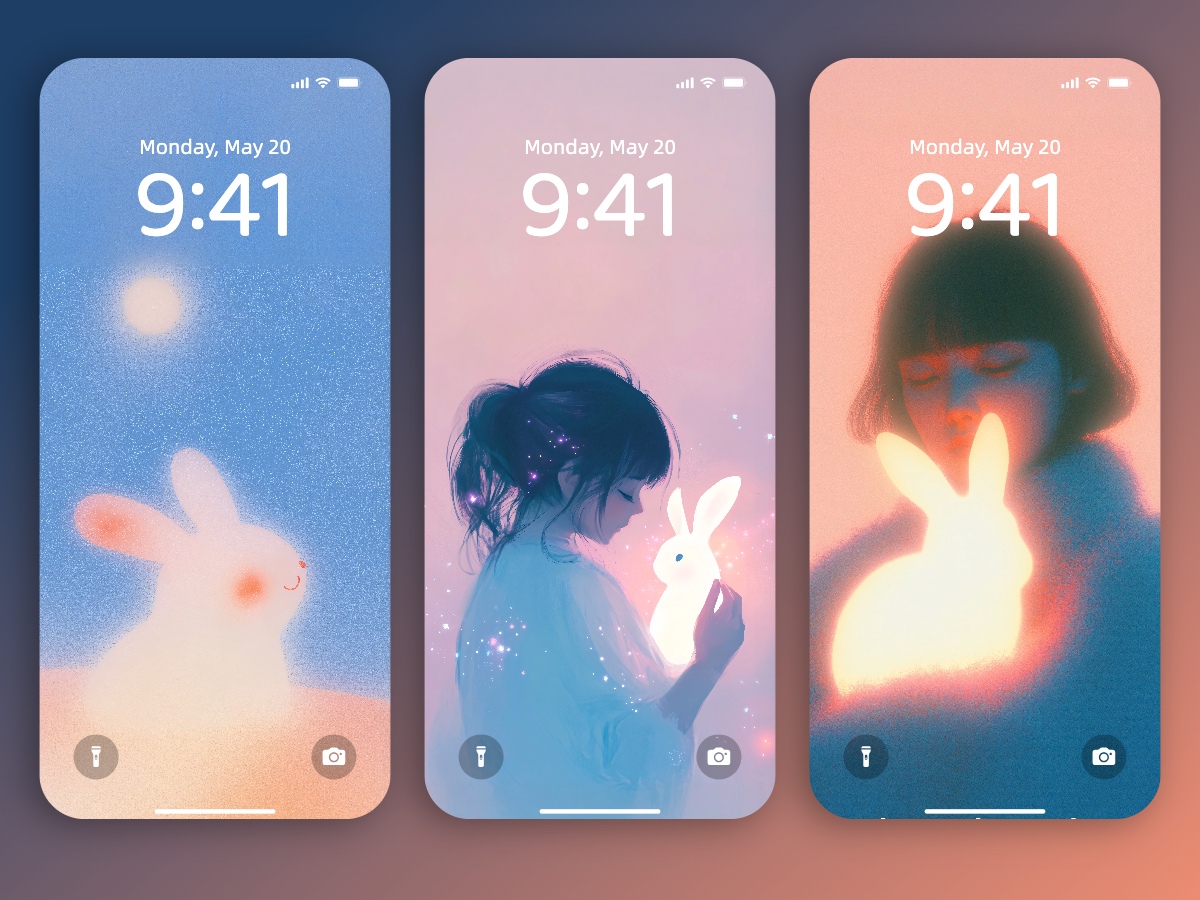

Imagine your phone screen glowing with the enchanting presence of a luminous rabbit, casting a soft, ethereal light — just in time for Mid-Autumn Festival! Our “Glowing Rabbit” 8K wallpapers bring a touch of magic to your iPhone or Android. Inspired by the moonlit legends of the Jade Rabbit, these wallpapers blend tradition with a modern twist, adding a splash of playful elegance to your device. Each design captures the essence of moonlit nights and the spirit of celebration, ensuring your screen shines as brightly as the moon. Get ready to hop into a world of light and whimsy every time you unlock your phone!
You can download all these wallpapers on Dejavu Wallpaper!
Experience the magic of AI in advance! Let the infinite imagination of AI decorate your screens, bring you fresh delights every day.


Have you ever gazed at the full moon during Mid-Autumn Festival and wondered about the legend of the moon rabbit? This fluffy celestial creature, often depicted pounding mochi with a mortar and pestle, has hopped into the hearts of many cultures around the world.
Where Did the Moon Rabbit Come From?
The story of the moon rabbit dates back thousands of years, with its origins rooted in ancient Chinese folklore. According to one of the most popular tales, the Jade Emperor, the ruler of Heaven, wanted to find a kind and selfless creature to live on the moon. Disguised as a beggar, he came down to Earth and asked a monkey, a fox, and a rabbit for food. The monkey gathered fruits, and the fox caught a fish, but the rabbit, with nothing to offer, bravely jumped into the fire, offering himself as food. Moved by the rabbit’s selflessness, the Jade Emperor sent him to live on the moon as a reward, where he now pounds herbs to make the elixir of life.
How Did This Myth Spread Across Cultures?
Interestingly, the moon rabbit isn’t just a Chinese legend. Many cultures across Asia and even in the Americas have similar stories. In Japan, the moon rabbit, or “Tsuki no Usagi,” is also seen pounding mochi, a sweet rice cake. The Japanese version mirrors the Chinese story but emphasizes the rabbit’s joy in making rice cakes, a symbol of good fortune. Meanwhile, in Aztec mythology, the moon rabbit tale takes a different turn. It tells of Quetzalcoatl, the feathered serpent god, who once traveled the Earth as a man. When he became hungry and tired, a rabbit offered itself as food. Touched by the rabbit’s sacrifice, Quetzalcoatl raised it to the moon, casting its shadow there for all to see.
What Is the Historical Connection Between Mid-Autumn Festival and Moon Worship?
The Mid-Autumn Festival, also known as the Moon Festival, has a deep-rooted connection with moon worship that dates back thousands of years. Imagine this: ancient Chinese farmers looking up at the night sky, gazing at the full moon as they celebrate the harvest. The moon, to them, wasn’t just a glowing orb—it was a symbol of unity, prosperity, and a divine presence that governed the rhythm of life.
Back then, people believed that the moon was a magical being, capable of influencing the tides, the growth of crops, and even human emotions. Legends like Chang’e, the Moon Goddess, added a mystical allure to the moon, making it an object of worship and admiration. So, when families come together during the Mid-Autumn Festival, they’re not just enjoying mooncakes; they’re partaking in an ancient ritual that honors the moon’s beauty and its mysterious power. It’s a celebration of togetherness under the moon’s soft glow, connecting us to both our ancestors and the cosmos.
Why is Mid-Autumn Festival called “China’s Thanksgiving Day”?
Mid-Autumn Festival is often dubbed “China’s Thanksgiving” because it’s all about gathering with loved ones and giving thanks. Just like Thanksgiving, it’s a time when families come together, share meals, and appreciate each other’s company. Traditionally, during this festival, people enjoy mooncakes, which symbolize unity and completeness. The festival celebrates the harvest and the full moon, representing a time of abundance and gratitude. It’s a bit like a harvest celebration mixed with family reunion vibes, making it China’s own version of giving thanks and cherishing family moments! 🌕🥮
Why Do Some Regions Hold a Moon Worship Ceremony When Eating Mooncakes?
In some regions, people don’t just eat mooncakes during the Mid-Autumn Festival; they hold a whole moon worship ceremony too! This all comes from ancient moon worship traditions and giving thanks for the harvest. Legend has it that the moon goddess Chang’e lives in the Moon Palace, and moon worship is a way to communicate with her, hoping for her blessings. People believe that the moon symbolizes reunion and beauty, and worshiping it can bring happiness and good luck. Traditionally, people prepare offerings like fruits and mooncakes, light incense under the moonlight, and while enjoying the delicious mooncakes, they pray for their family’s peace and health.
But there’s more to it than just that! The moon worship ceremony also has a deep cultural meaning. It brings people closer together, letting everyone feel the charm of ancient traditions during the time of reunion. This ceremony isn’t just a feast of flavors; it’s a way of sharing emotions. It lets people savor the sweetness of mooncakes while feeling the warmth of family bonds and hoping for a bright future ahead!