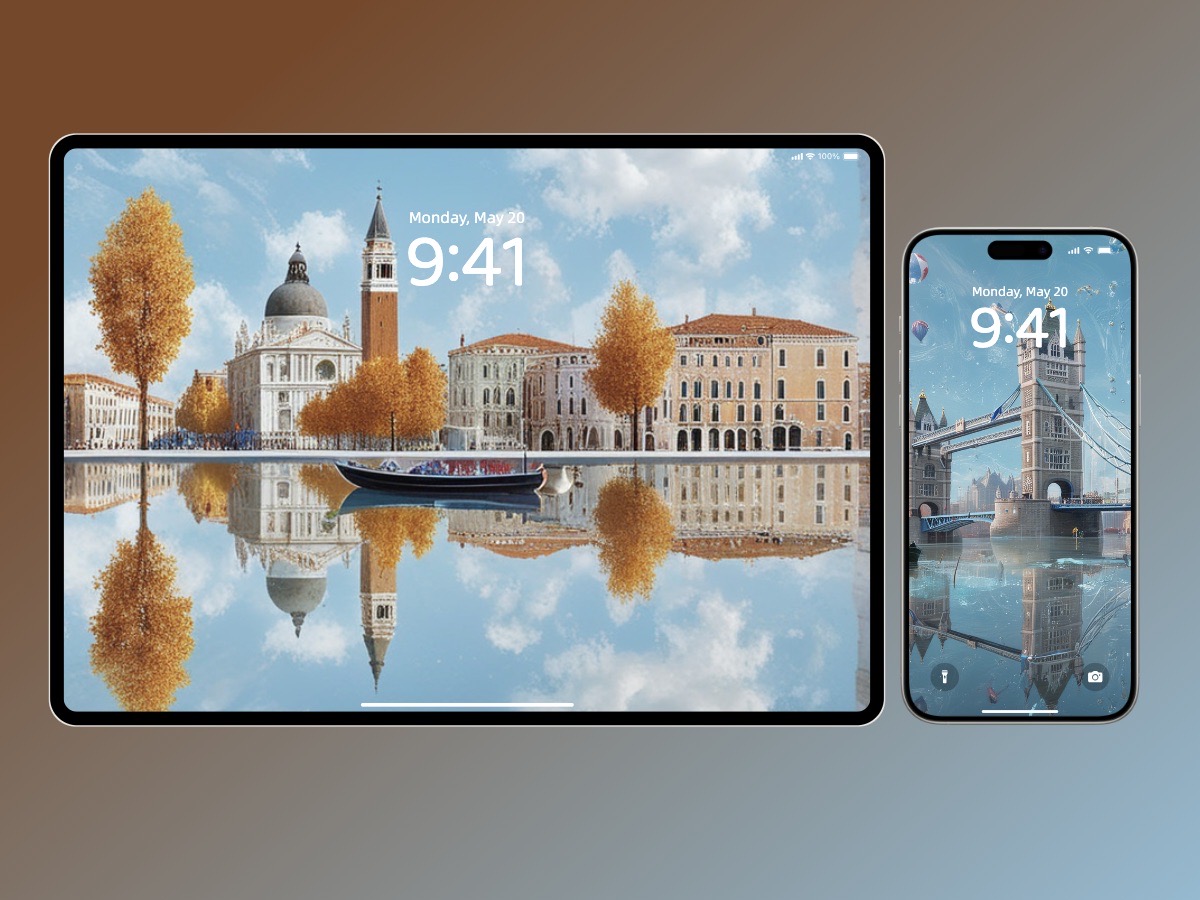

Have you ever wondered what some of the world’s most iconic landmarks would say if they had mirrors? Imagine Venice’s canals whispering secrets to the city’s ancient architecture or the London Tower Bridge casting a regal reflection upon the Thames. Across the pond, the Golden Gate Bridge would shimmer in the San Francisco Bay, a dance of red and gold. Meanwhile, Lady Liberty stands tall and proud, her reflection a constant reminder of hope and freedom. In Paris, the Eiffel Tower’s silhouette graces the Seine, adding a touch of romance to every wave. The Potala Palace reflects across its tranquil waters, whispering stories of centuries past. And then there are the serene Chinese courtyards and the poetic landscapes of Jiangnan’s water towns, where reflections seem like ancient paintings, brought to life. Each reflection tells its own story, a mirror image of history, culture, and imagination.
You can download all these wallpapers on Dejavu Wallpaper!
Experience the magic of AI in advance! Let the infinite imagination of AI decorate your screens, bring you fresh delights every day.


What do water reflections symbolize?
Water reflections are like nature’s mirrors, revealing more than just a scenic image. They symbolize self-awareness, suggesting that what we see on the surface often hints at deeper truths below. In literature and pop culture, water reflections can represent duality — a calm exterior hiding inner turmoil, or the difference between who we are and who we appear to be. Sometimes, reflections are about change, hinting at transformation, just like ripples in a pond can completely alter what we see. So next time you look at a water reflection, think about what’s beneath the surface and what truths are waiting to be discovered!
How Do Water Reflections Turn Ordinary Structures into Art?
When buildings and bridges reflect on the surface of a pond, river, or fountain, they create an unexpected second dimension. These reflections double the presence of the structure, making even a simple building appear grander and more profound. The reflected image often distorts, softens, or elongates in the water, adding a surreal touch to the otherwise static and geometric lines of man-made structures. This blending of solid forms with liquid surfaces creates an ever-changing visual narrative, a moving painting that shifts with each ripple and wave.
What Role Did Reflections Play in Ancient Architecture?
Reflections have been a key element in architectural design for centuries. Think of the Taj Mahal with its shimmering reflection in its surrounding pools or the serene waters of Japan’s Kinkaku-ji temple that mirrors its golden structure. Ancient architects knew the power of reflections; they used water features not just for aesthetics but to enhance the spiritual and symbolic aspects of their creations. The reflection was not just a duplicate—it was an ethereal version, representing the divine or the supernatural realm. The Greeks and Romans also constructed water basins to capture the reflections of their temples, adding a layer of harmony and symmetry to their designs.
Why Do Modern Architects Still Use Water Reflections in Their Designs?
Modern architects continue to harness the power of water reflections, and for good reason. Reflective pools, fountains, and lakes add a dynamic element to contemporary designs, breathing life into steel and glass. These reflective surfaces create a dialogue between the structure and its environment, often blurring the line between built and natural spaces. For example, at the Louvre in Paris, the glass pyramid’s reflection in the pool below creates a kaleidoscopic effect that captivates visitors and enhances the landmark’s visual appeal. Similarly, Zaha Hadid’s work frequently incorporates reflections to soften bold, futuristic designs, creating spaces that feel alive and fluid.
How Do Reflections Change the Way We Perceive Space?
Reflections can manipulate the viewer’s perception of space, making areas feel larger or more intimate depending on their use. Water reflections, in particular, can add depth to flat landscapes or create an illusion of continuity in confined urban settings. When you see a city skyline reflected in a river, your brain processes the scene as more expansive than it is. This optical trick has been employed in urban planning to create visual interest and provide a sense of balance in densely built environments.
What Are Some Surprising Artistic Techniques Using Water Reflections?
Some artists and photographers take advantage of water reflections to create art that plays with perception. Imagine a photograph where the reflection is clearer than the actual object, or a painting where the colors in the reflection are more vivid and striking than in reality. Artists like Claude Monet used the reflective qualities of water to explore light and color in ways that were impossible with traditional landscape painting. His series of paintings depicting the reflections of the Japanese bridge in his Giverny garden create a dreamlike atmosphere, turning water into an artist’s canvas that captures the fleeting beauty of a moment.