

Exploring the Beauty of Traditional Chinese Landscape Paintings
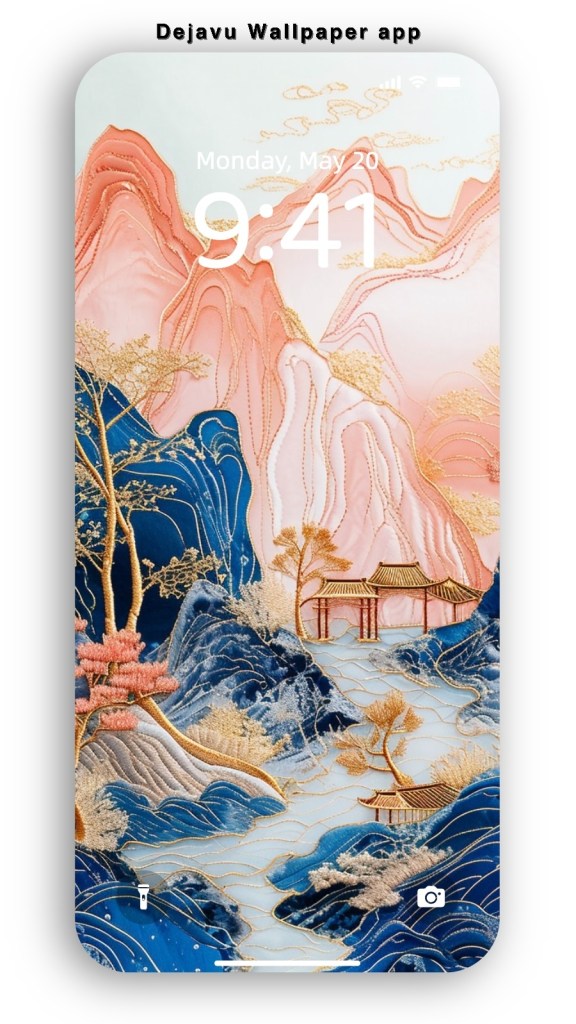
Traditional Chinese landscape painting, known for its profound beauty and intricate details, has captivated art enthusiasts for centuries. This ancient art form is more than just a visual feast; it embodies philosophical and cultural elements that reflect the essence of Chinese aesthetics. Through a blend of nature, spirituality, and artistry, traditional Chinese landscape paintings offer a unique glimpse into the rich tapestry of Chinese culture.
You can download all these wallpapers on Dejavu Wallpaper!
Experience the magic of AI in advance! Let the infinite imagination of AI decorate your screens, bring you fresh delights every day.






What are some famous Chinese landscape paintings?
Ready to explore the world of Chinese landscape painting? Let’s start with the legendary “Dwelling in the Fuchun Mountains” by Huang Gongwang—a masterpiece spanning over 20 feet of rolling mountains, swirling mist, and ancient trees. Next, dive into Fan Kuan’s “Travelers Among Mountains and Streams,” where tiny travelers wind through towering peaks, reminding us how small we are in the grand scheme of nature. And who could forget “Early Spring” by Guo Xi? It’s a perfect blend of soft, blossoming trees and rugged cliffs, capturing the renewal of life. These masterpieces aren’t just paintings; they’re epic adventures captured in ink, inviting you to wander through each stroke and splash. Ready to get lost in these timeless landscapes?
How Did Traditional Chinese Landscape Painting Evolve?
The origins of traditional Chinese landscape painting can be traced back to the Tang Dynasty (618-907 AD). Early works were influenced by Daoist and Buddhist philosophies, which emphasized the unity of nature and the spiritual journey of the individual. By the Song Dynasty (960-1279 AD), landscape painting became a significant genre, characterized by its focus on depicting serene and idealized landscapes. Artists like Fan Kuan and Guo Xi became renowned for their masterpieces that combined technical skill with philosophical depth, setting the standards for future generations.
What Are the Key Elements of Traditional Chinese Landscape Paintings?
Several key elements define traditional Chinese landscape paintings. One of the most important is the use of perspective, known as “floating perspective,” which allows viewers to see the landscape from multiple viewpoints simultaneously. This technique creates a sense of depth and dimension without relying on linear perspective. Additionally, the use of brushwork, known as “xieyi” (写意) or “freehand style,” emphasizes the expressive and spontaneous qualities of the brushstroke, capturing the essence of the subject rather than its exact appearance.
How Do Artists Convey Emotion Through Landscape Paintings?
Emotion and philosophy are intricately woven into traditional Chinese landscape paintings. Artists use various techniques to evoke feelings and convey messages. For example, the placement of elements within the composition can suggest tranquility or grandeur, while the choice of colors and brushwork can reflect different moods. The use of empty space, or “liubai” (留白), is particularly significant as it allows for the viewer’s imagination to fill in the gaps, adding a personal dimension to the interpretation of the painting.
What are some famous poems about Chinese landscapes?
China’s landscape poetry has a rich history and unique charm. 崔颢’s poem “Yellow Crane Tower” captures the essence of the Yellow Crane Tower with lines like, “The former occupants have flown away on the yellow crane, leaving only the Yellow Crane Tower here.” His concise language immortalizes the tower’s solitude and beauty.
Li Bai’s “Phoenix Terrace” exudes grandeur, with verses such as, “Three mountains fall beyond the blue sky, and two rivers divide the White Emperor City.” He uses majestic imagery to express his lofty ambitions, as if the poetry on Phoenix Terrace could transcend time.
Su Shi’s “Spring River Evening Scenery” beautifully describes the early warmth of spring, with lines like, “A few branches of peach blossoms beyond the bamboo, the spring river’s warmth first known to the ducks.” He skillfully blends natural beauty with philosophical reflections, showcasing the gentle allure of the spring river and the rhythm of life.
These poems not only depict natural landscapes but also embody the emotions and thoughts of the ancients, continuing to captivate readers with their timeless charm.