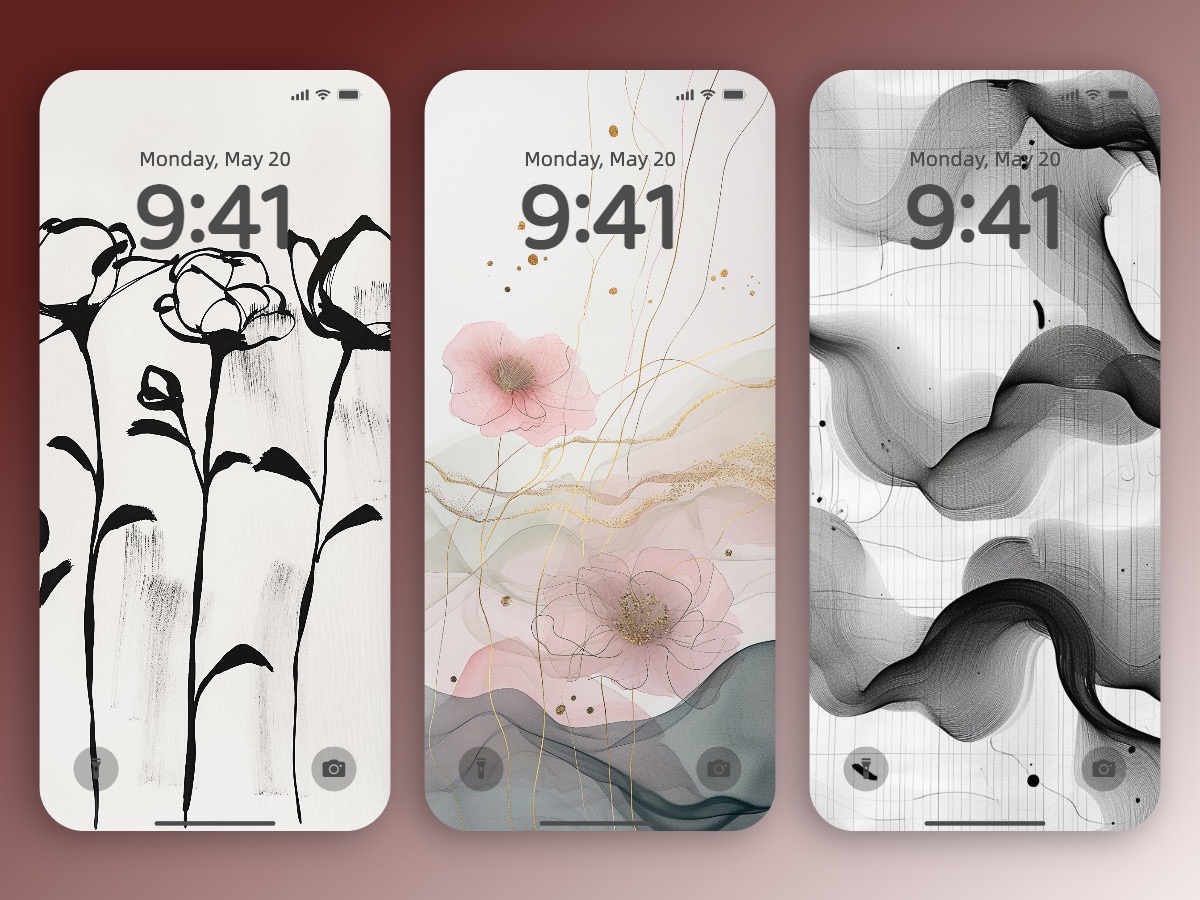

Abstract ink painting combines the fluidity of ink with the boundless creativity of abstract art, creating a mesmerizing dance of forms and shades. This artistic style transcends traditional boundaries, using the unpredictable nature of ink to explore the depths of emotion and imagination. Each stroke tells a story, often open to interpretation, inviting viewers to lose themselves in a world of swirling patterns and dynamic contrasts. From minimalist monochromes to vibrant splashes of color, abstract ink painting captures the essence of spontaneity and expression. It’s a captivating journey where the unexpected becomes the extraordinary, and every glance reveals something new and intriguing.
You can download all these wallpapers on Dejavu Wallpaper!
Experience the magic of AI in advance! Let the infinite imagination of AI decorate your screens, bring you fresh delights every day.


How Did Abstract Ink Painting Evolve Over Centuries?
The evolution of abstract ink painting is a journey through centuries of artistic innovation and cultural exchange. Originating in ancient China, this form of painting was heavily influenced by Taoist and Zen Buddhist philosophies, which emphasized harmony with nature and the beauty of simplicity. During the Song Dynasty (960-1279), literati painters began to experiment with abstract forms, moving away from detailed landscapes to more expressive and interpretative works. The Ming Dynasty (1368-1644) saw further developments as artists like Bada Shanren and Shi Tao infused their works with personal expression and abstract elements. The 20th century brought about a fusion of Eastern and Western art forms, with artists like Zhang Daqian and Zao Wou-Ki pushing the boundaries of abstract ink painting, incorporating modernist influences and new techniques.
What Techniques Define Abstract Ink Painting?
The techniques used in abstract ink painting are as diverse as the artists who practice them. One of the most fundamental techniques is the use of varying brushstrokes to create texture and movement. Artists often employ dry brush techniques to produce rough, expressive lines, or wet brush techniques for smooth, flowing strokes. The control of ink density and the balance between ink and water are crucial in creating depth and tonal variations. Another key technique is the use of negative space, which allows the emptiness to speak as powerfully as the inked areas. This interplay between positive and negative space creates a dynamic tension within the artwork, inviting viewers to explore the unseen and the implied.
Why is Abstract Ink Painting So Captivating?
The allure of abstract ink painting lies in its ability to evoke emotions and provoke thought without relying on recognizable forms. The viewer is invited to interpret the artwork through their own experiences and perspectives, finding meaning in the abstract shapes and lines. This open-ended nature of abstract ink painting fosters a unique connection between the artist and the audience, where the meaning is not dictated but discovered. The use of traditional materials and techniques also adds a layer of historical and cultural richness, grounding the abstract forms in a deep artistic heritage.
How Does Abstract Ink Painting Influence Modern Art?
The impact of abstract ink painting on modern art is profound and far-reaching. Contemporary artists continue to draw inspiration from the techniques and philosophies of this ancient art form, blending them with modern styles and mediums. The emphasis on spontaneity, simplicity, and emotional expression in abstract ink painting resonates with many modern art movements, such as Abstract Expressionism and Minimalism. Additionally, the global appreciation of abstract ink painting has led to cross-cultural exchanges, where artists from different backgrounds experiment with ink and brush, creating innovative works that bridge the gap between tradition and modernity.