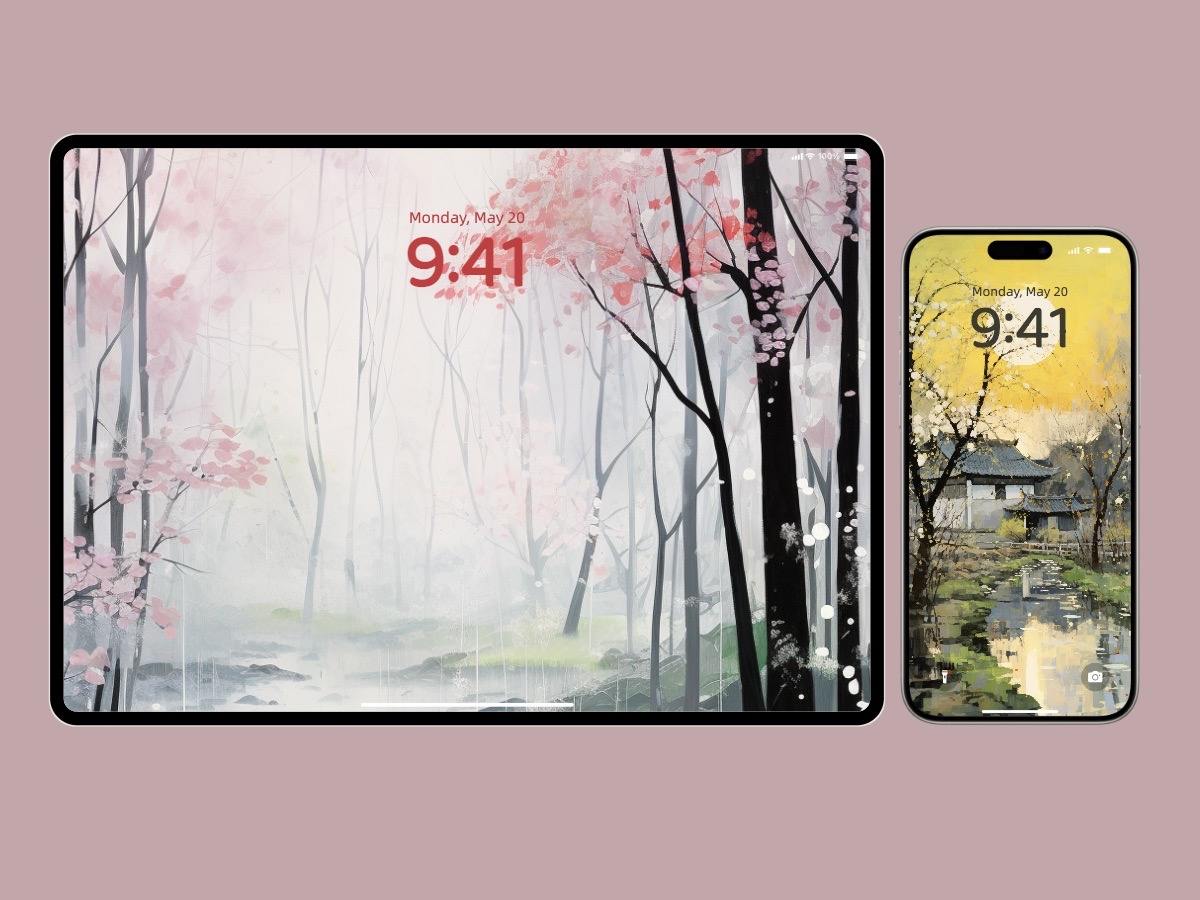

The Timeless Elegance of Wu Guanzhong’s Chinese Watercolor Painting
In the vibrant world of Chinese art, few names shine as brightly as Wu Guanzhong. Renowned for his unique blend of traditional Chinese painting techniques and Western art styles, Wu’s work has left an indelible mark on the art world. His watercolor paintings, in particular, showcase his innovative approach and deep appreciation for nature and culture.
Chinese watercolor painting, known for its ethereal beauty and profound cultural significance, has captivated art enthusiasts for centuries. Let’s delve into the fascinating world of this ancient art form, exploring its origins, techniques, and the unique elements that make it so captivating.
You can download all these wallpapers on Dejavu Wallpaper!
Experience the magic of AI in advance! Let the infinite imagination of AI decorate your screens, bring you fresh delights every day.


What Are the Origins of Chinese Watercolor Painting?
Chinese watercolor painting, or “shui-mo hua” (水墨画), traces its roots back to the Tang Dynasty (618-907 AD). It emerged as an essential aspect of Chinese culture, deeply intertwined with the philosophical and spiritual beliefs of the time. The earliest practitioners were scholar-artists who combined painting, poetry, and calligraphy to create harmonious works of art. These early artists believed that painting was not merely a visual art but a medium to express one’s inner thoughts and emotions, reflecting the Taoist and Confucian ideals of harmony with nature.
How Are Traditional Techniques and Tools Used in Chinese Watercolor Painting?
Chinese watercolor painting employs a unique set of techniques and tools that distinguish it from Western watercolor traditions. The primary tools include the brush, ink, and rice paper. The brush, often made from animal hair, allows for a wide range of strokes, from delicate lines to bold sweeps. Ink, made from pine soot and animal glue, is ground on an inkstone with water to create varying shades of black. Rice paper, known for its absorbent and delicate nature, requires careful handling to achieve the desired effects.
Artists employ techniques such as “xieyi” (写意), or freehand style, emphasizing spontaneous expression, and “gongbi” (工笔), a meticulous, detailed approach. The interplay of ink and water on rice paper creates a dynamic, fluid quality, capturing the essence of the subject with minimal strokes.
What Are the Common Themes in Chinese Watercolor Painting?
Nature is the predominant theme in Chinese watercolor painting. Landscapes, known as “shan shui” (山水), or “mountain and water” paintings, depict the majesty and tranquility of nature. These works often feature misty mountains, flowing rivers, and serene valleys, inviting viewers to immerse themselves in the natural world. Another common theme is the “bird-and-flower” painting, showcasing the delicate beauty of flora and fauna. These works symbolize various virtues and convey the harmony between humans and nature.
Human figures, especially those of historical or mythical significance, also appear in Chinese watercolor paintings. These depictions often tell stories of legendary heroes, philosophers, and deities, blending visual art with rich cultural narratives.
How Has Chinese Watercolor Painting Evolved Over Time?
While rooted in tradition, Chinese watercolor painting has evolved significantly over the centuries. The Song Dynasty (960-1279 AD) saw the refinement of landscape painting, with artists like Fan Kuan and Guo Xi creating intricate and expansive works. The Yuan Dynasty (1271-1368 AD) introduced more expressive and individualistic styles, influenced by the Mongol rule.
The Ming (1368-1644 AD) and Qing (1644-1912 AD) Dynasties witnessed further diversification, with artists exploring new themes and techniques. In the modern era, Chinese watercolor painting has continued to evolve, blending traditional methods with contemporary influences. Artists like Qi Baishi and Zhang Daqian have pushed the boundaries of the art form, achieving international recognition and inspiring new generations of painters.